3-Player Old School Sudden Death
Why
There aren’t many great multiplayer Magic formats out there, particularly for 3 players. Usual problems of multiplayer Magic as I have experienced them are:
- Board stales, downtime, long and non-interactive games.
- Kingmaking, politics, complaining, breaking deals… Some people like those elements in multiplayer but I don’t.
This is my attempt to minimize the above aspects. And in old school setting.
See Design targets more on the philosophy.
This format was inspired by tmikonen’s cube design. Thank you.
Rules
- Randomize seats. Randomize who takes the first pick.
- Grid draft the cube as per luckypaper.co rules for 3-players, except after first pick don’t refill the grid with 3 new, random cards.
- Players keep their drafted cards face up.
- Build a minimum of 15 card deck (usually 5 lands, 10 nonlands).
- Players start at 1 life. The player who took the first pick goes first.
- One free mulligan. Then no mulligans.
- Attack on the right.
- You gain 1 victory point whenever your opponent to your right is killed. No matter how or by whom.
- If you kill two players at the same time gain 2 victory points instead. Others gain none.
- If you cause a tie when two players are left, you lose instead. If you cause a tie when three players are left, no consequences. Play again.
- First to lose goes first in the next game.
- First player to gain 3 victory points wins the match. The game ends immediately.
Otherwise conventional Magic rules (no mana burn etc.) and general multiplayer rules apply (first players draws a card, turn and priority goes clockwise etc.)
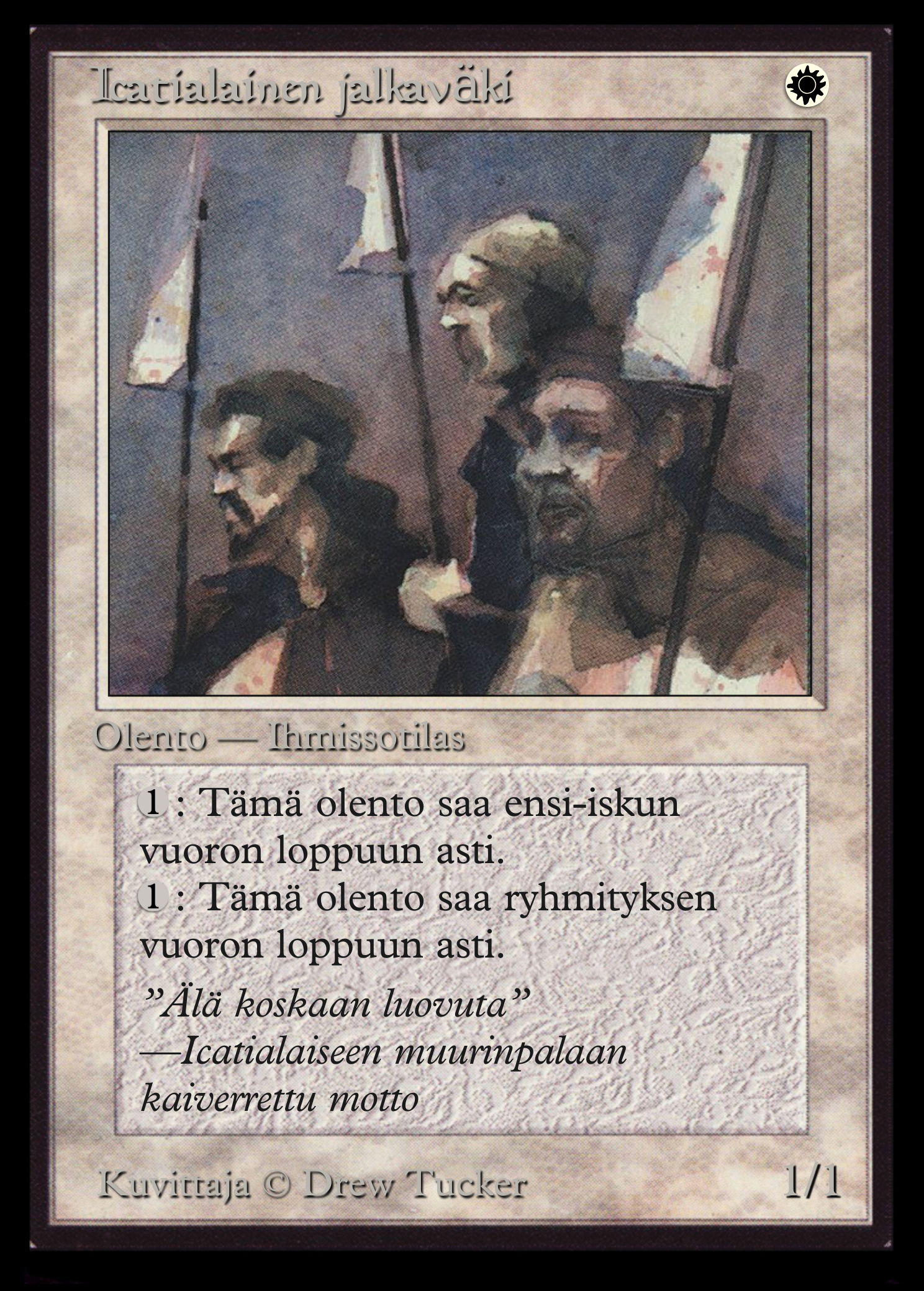
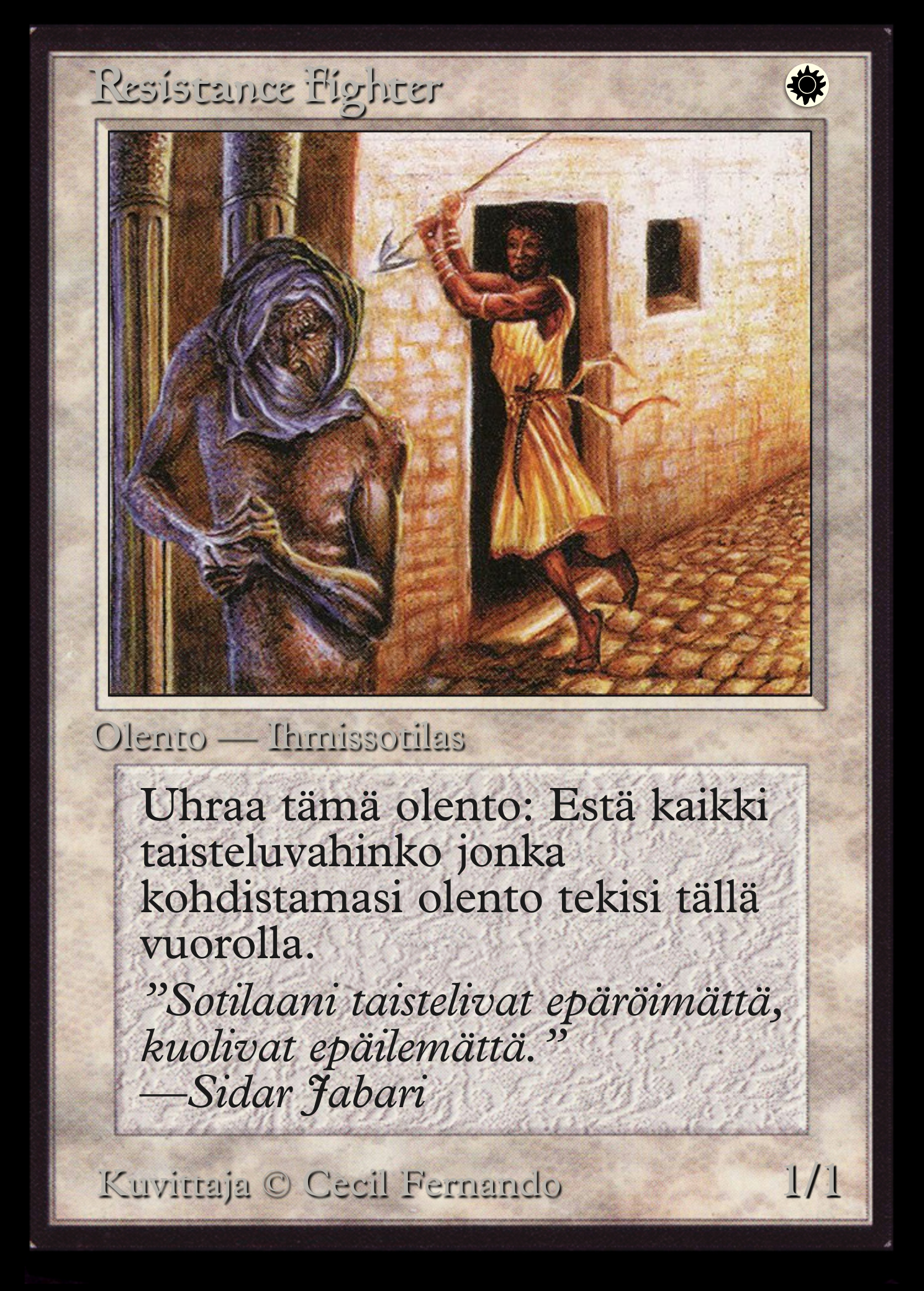
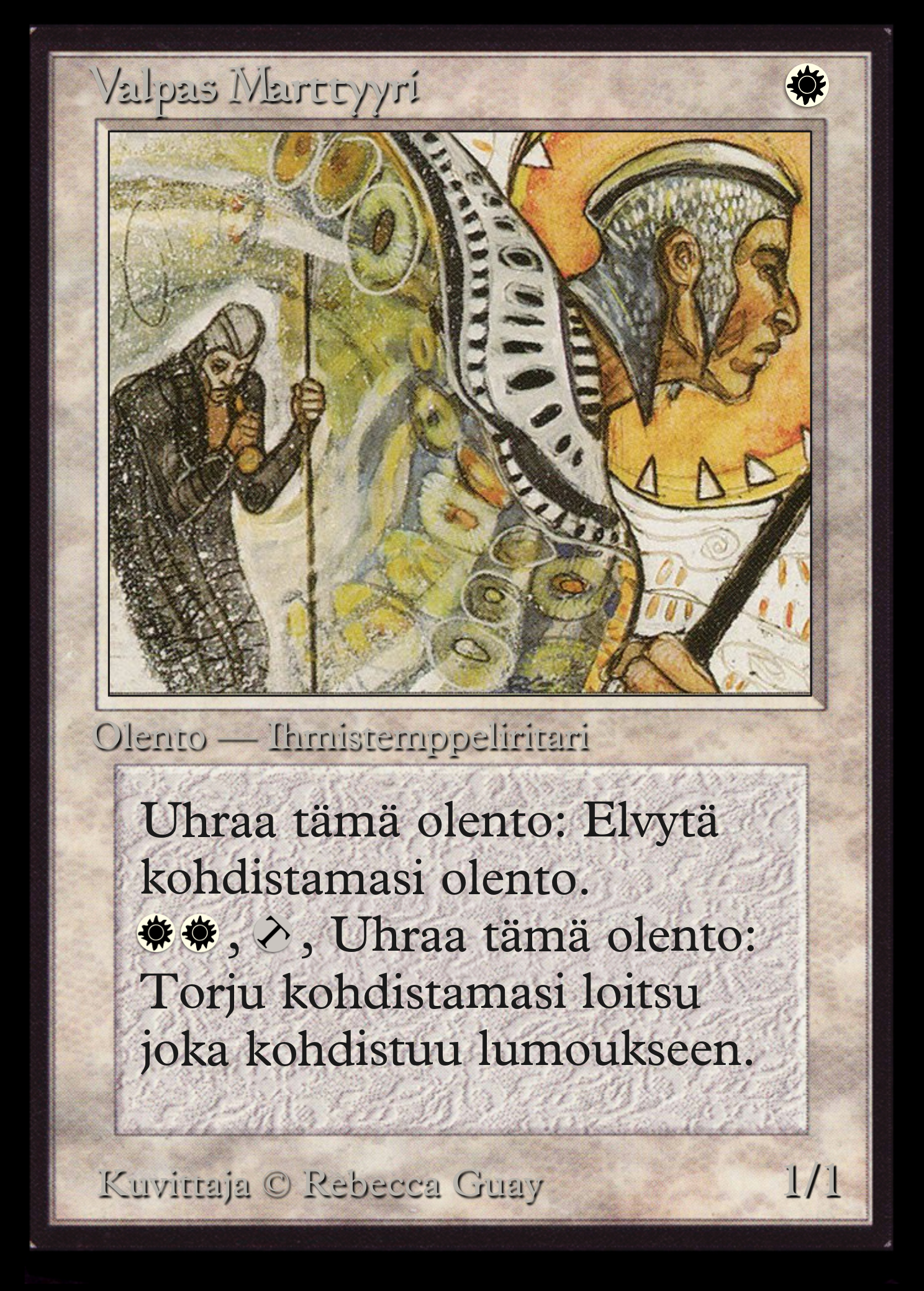
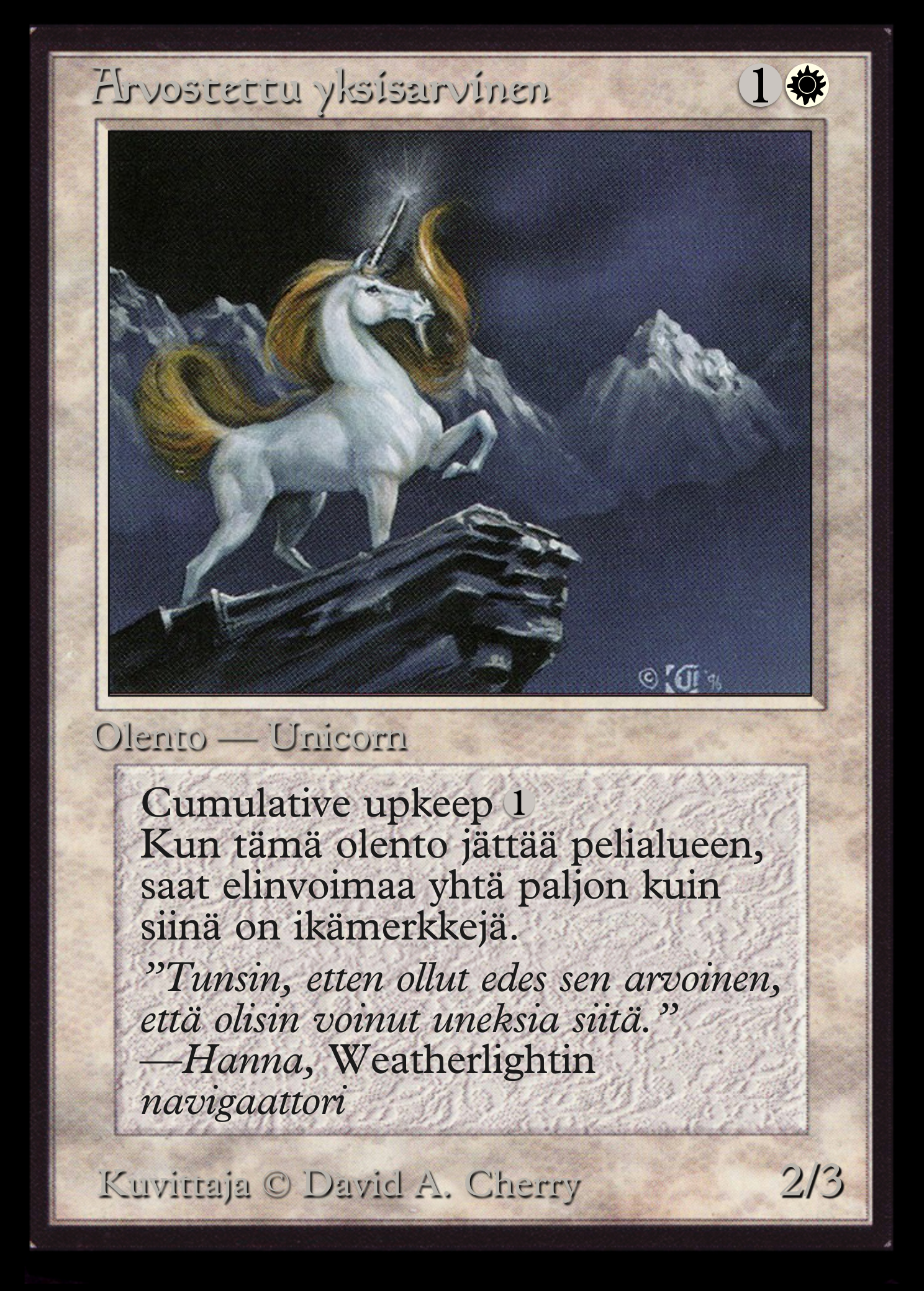
The cube (54 cards) version3
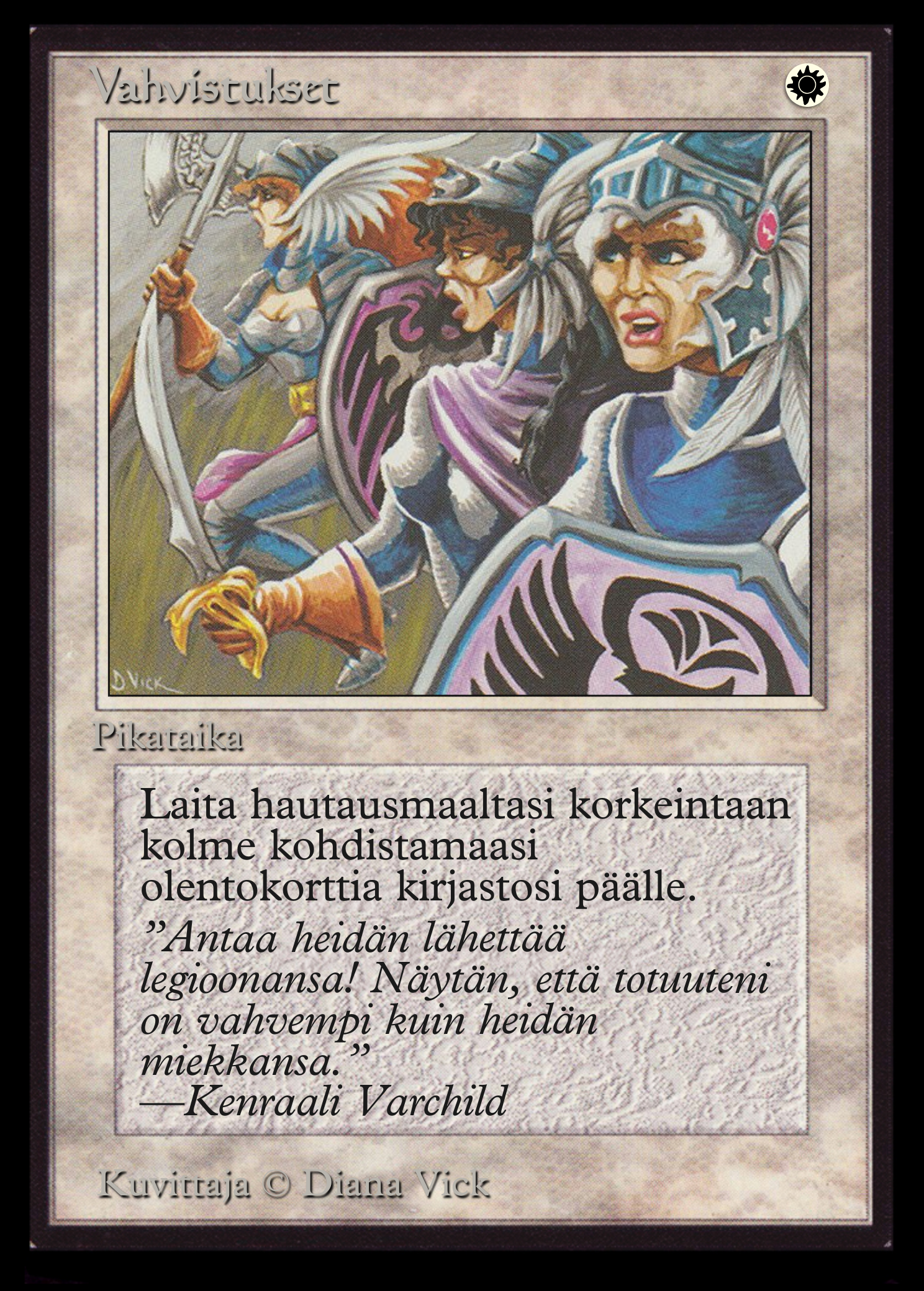
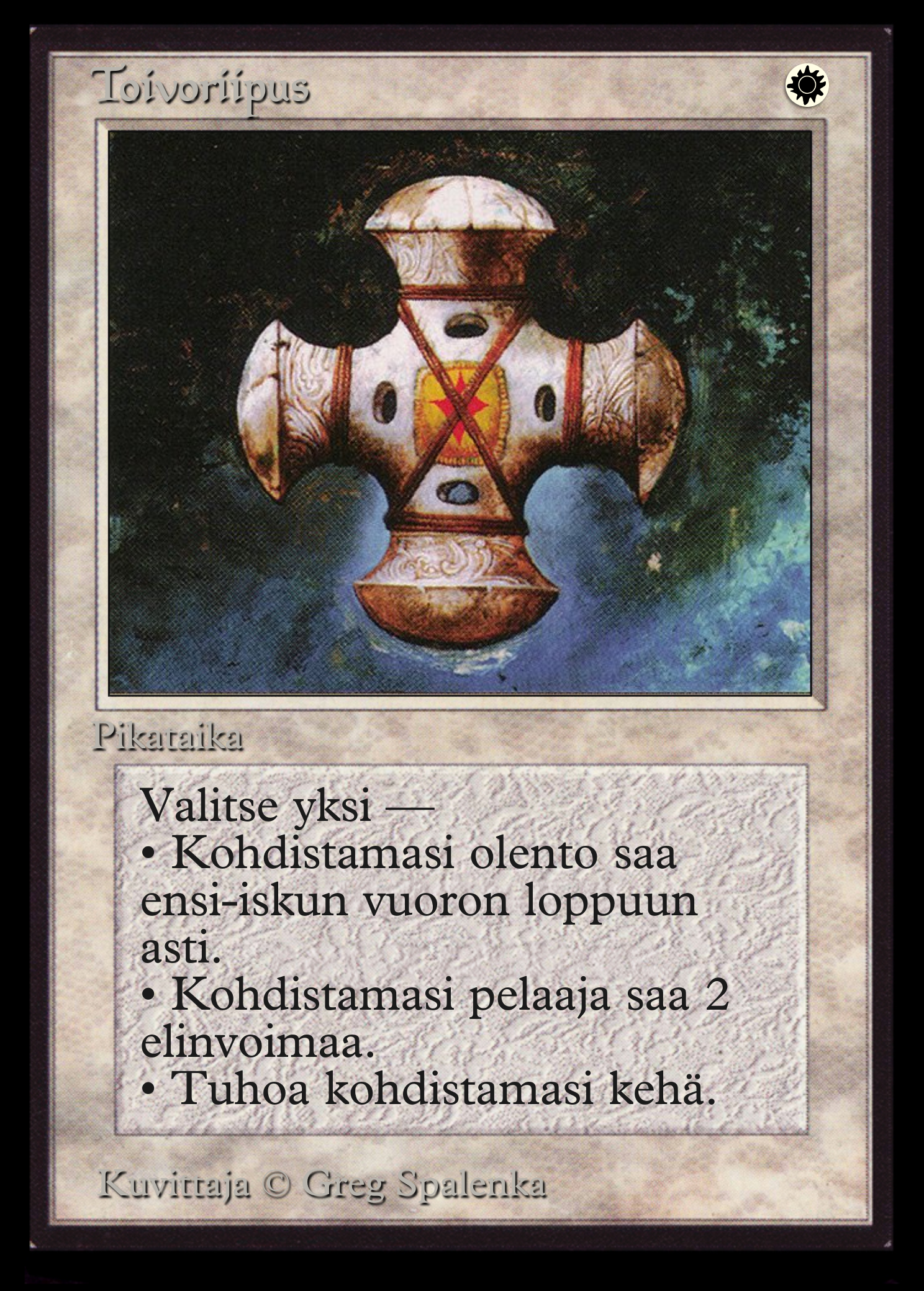
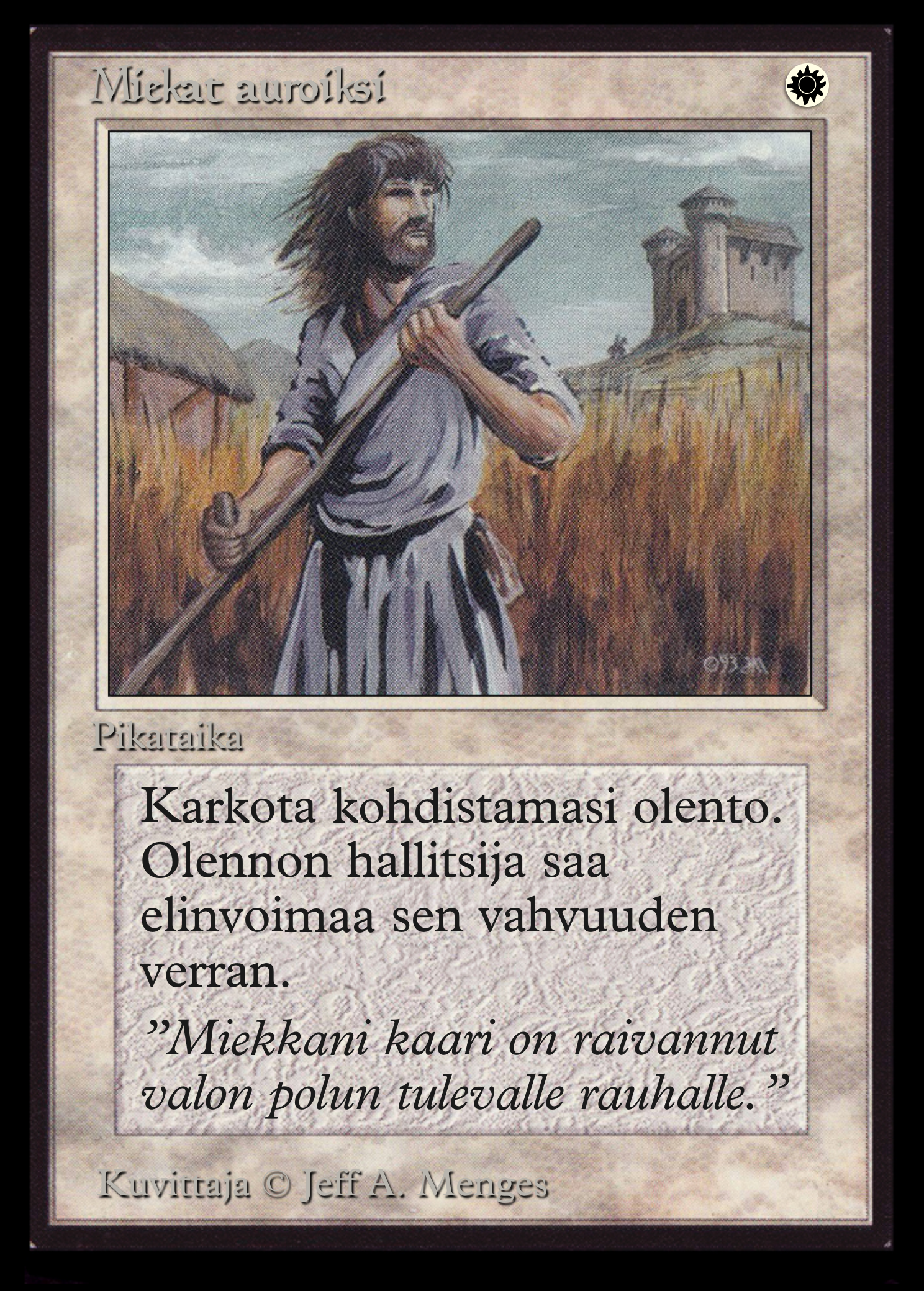
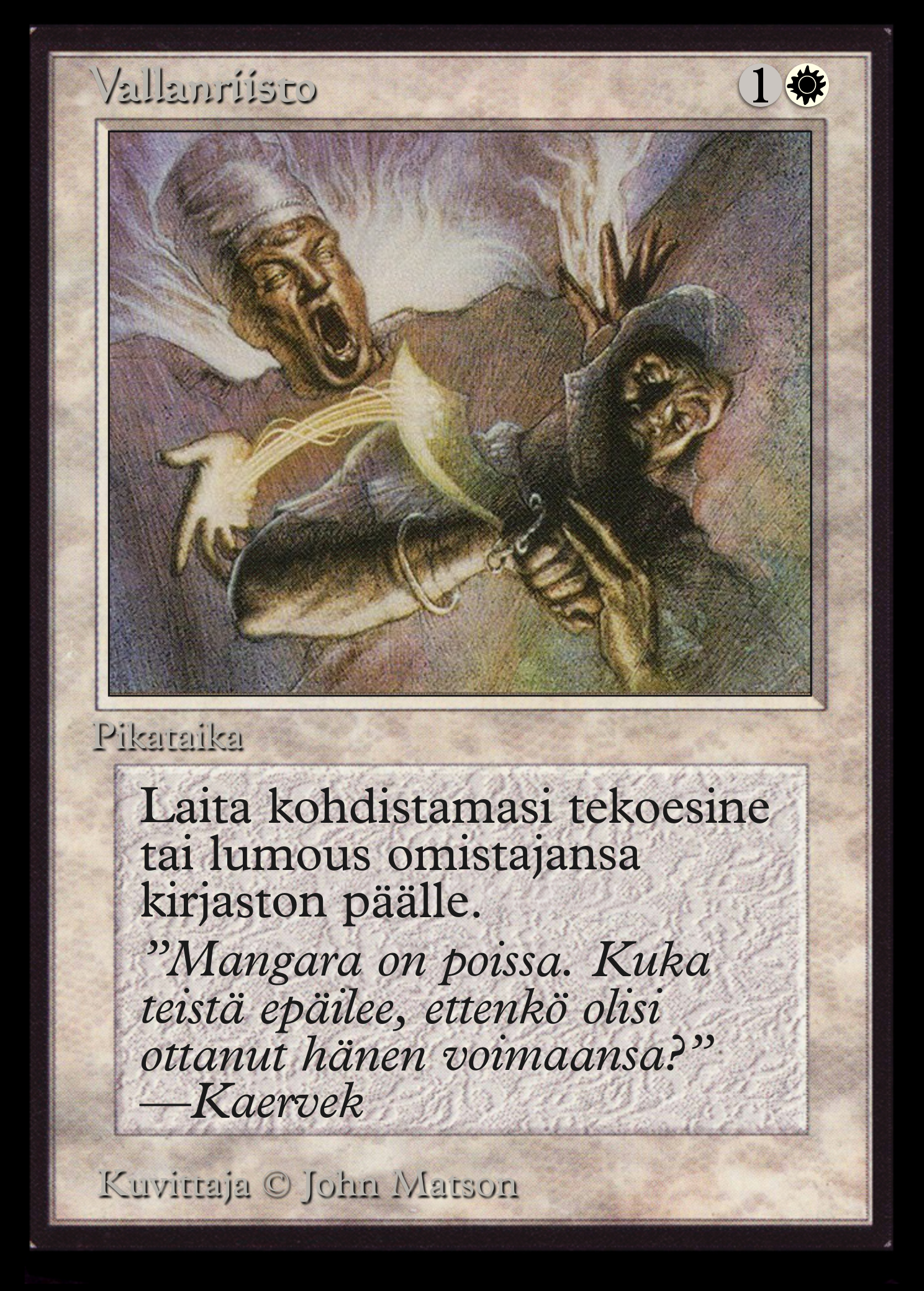
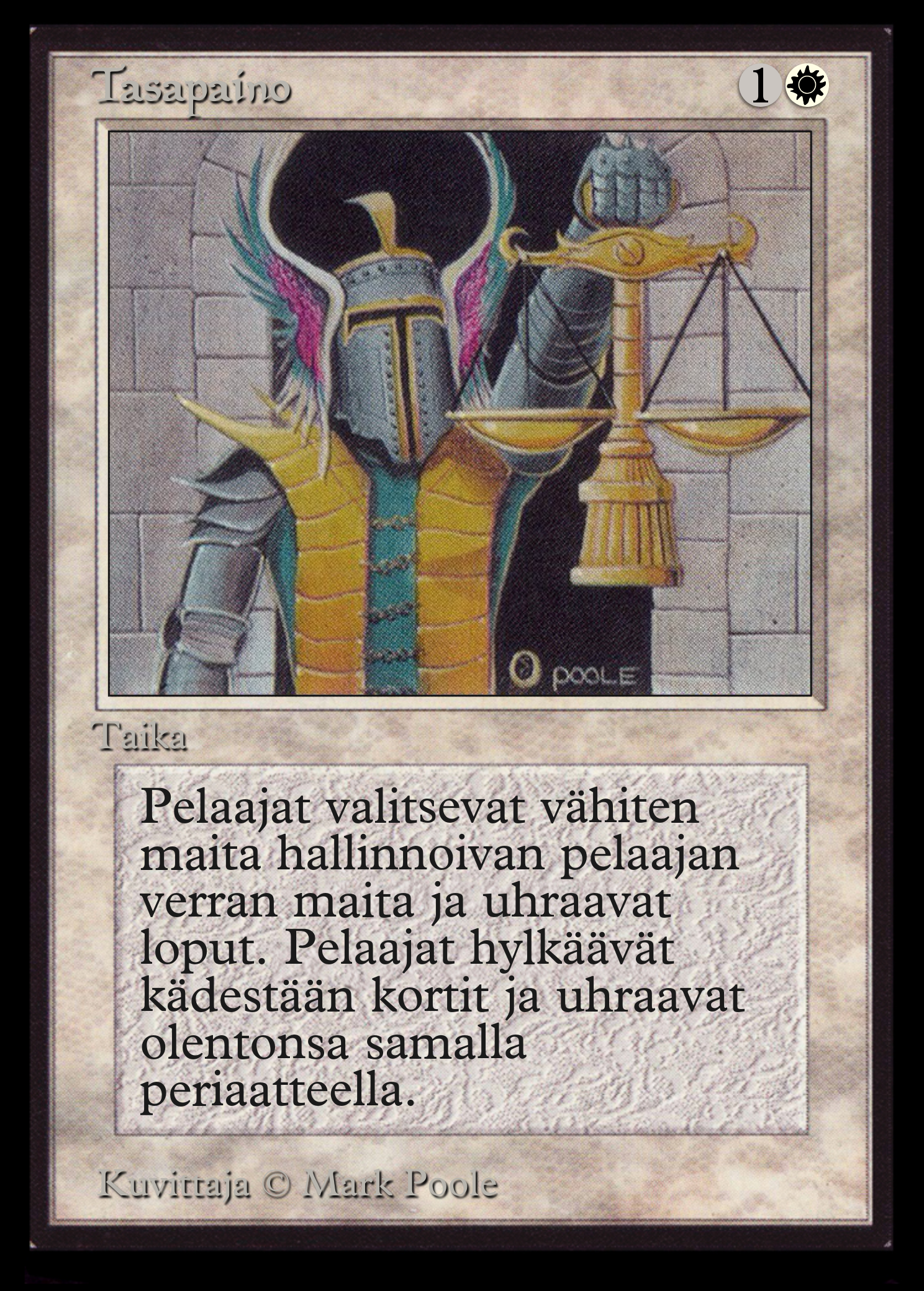
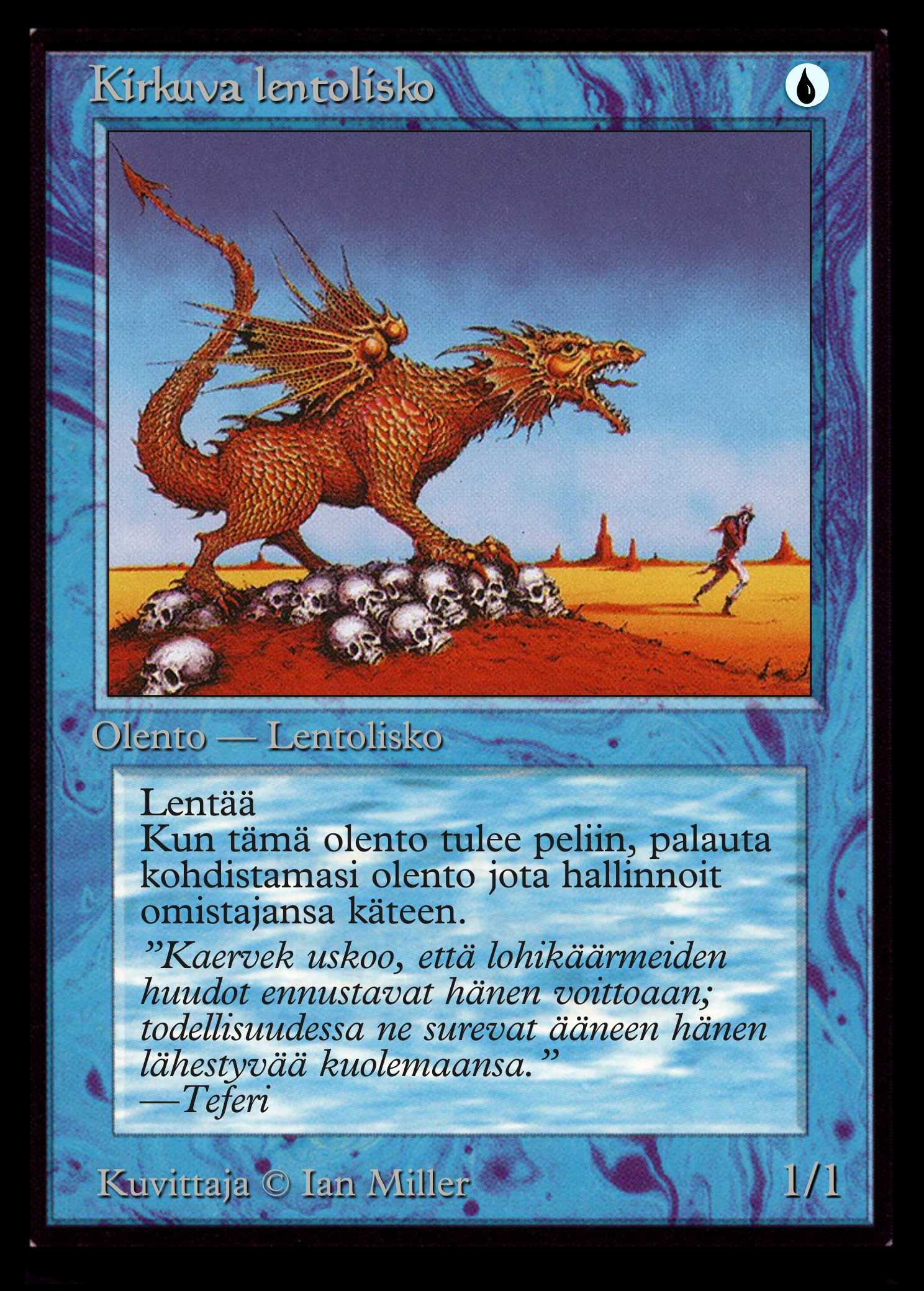
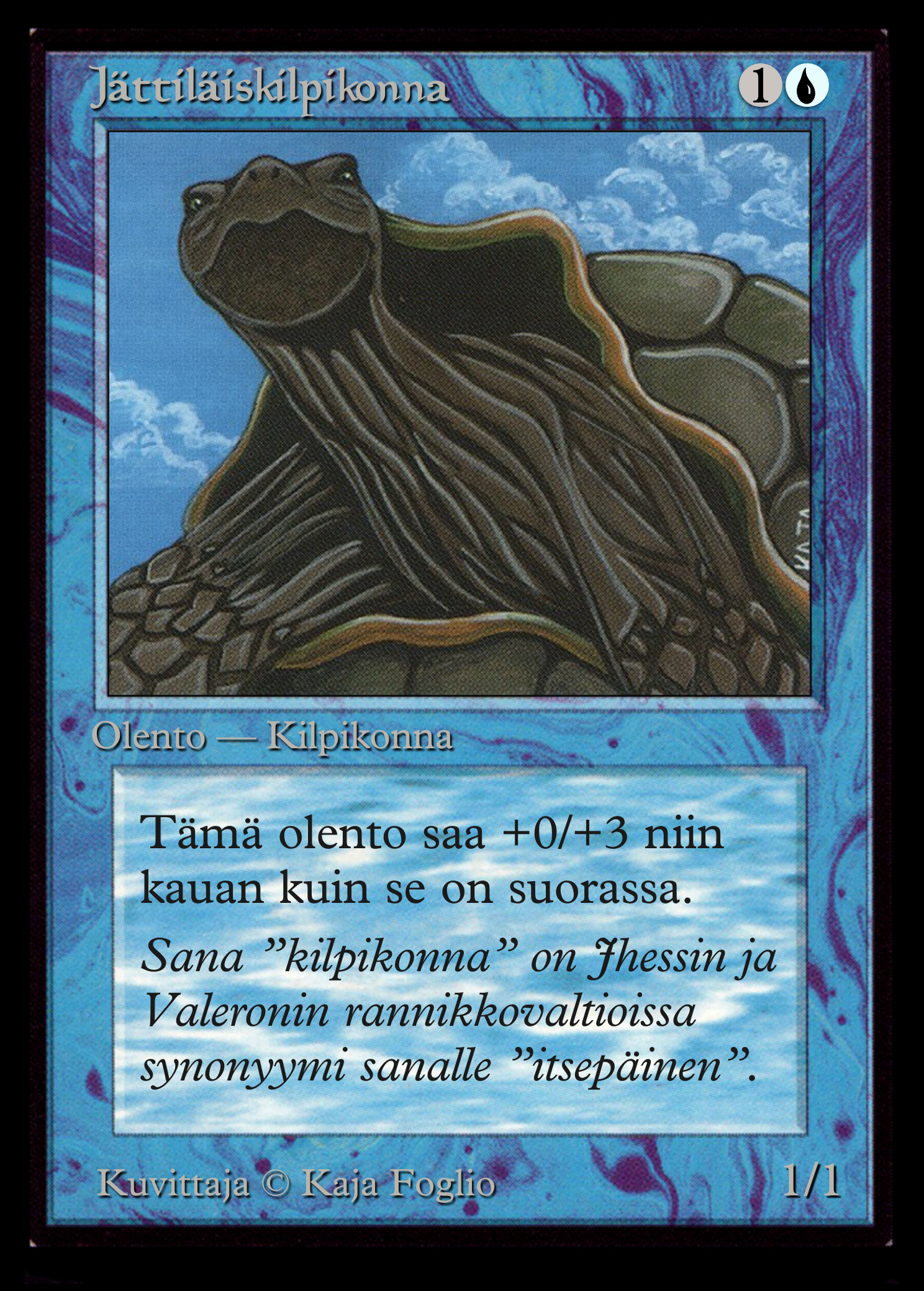
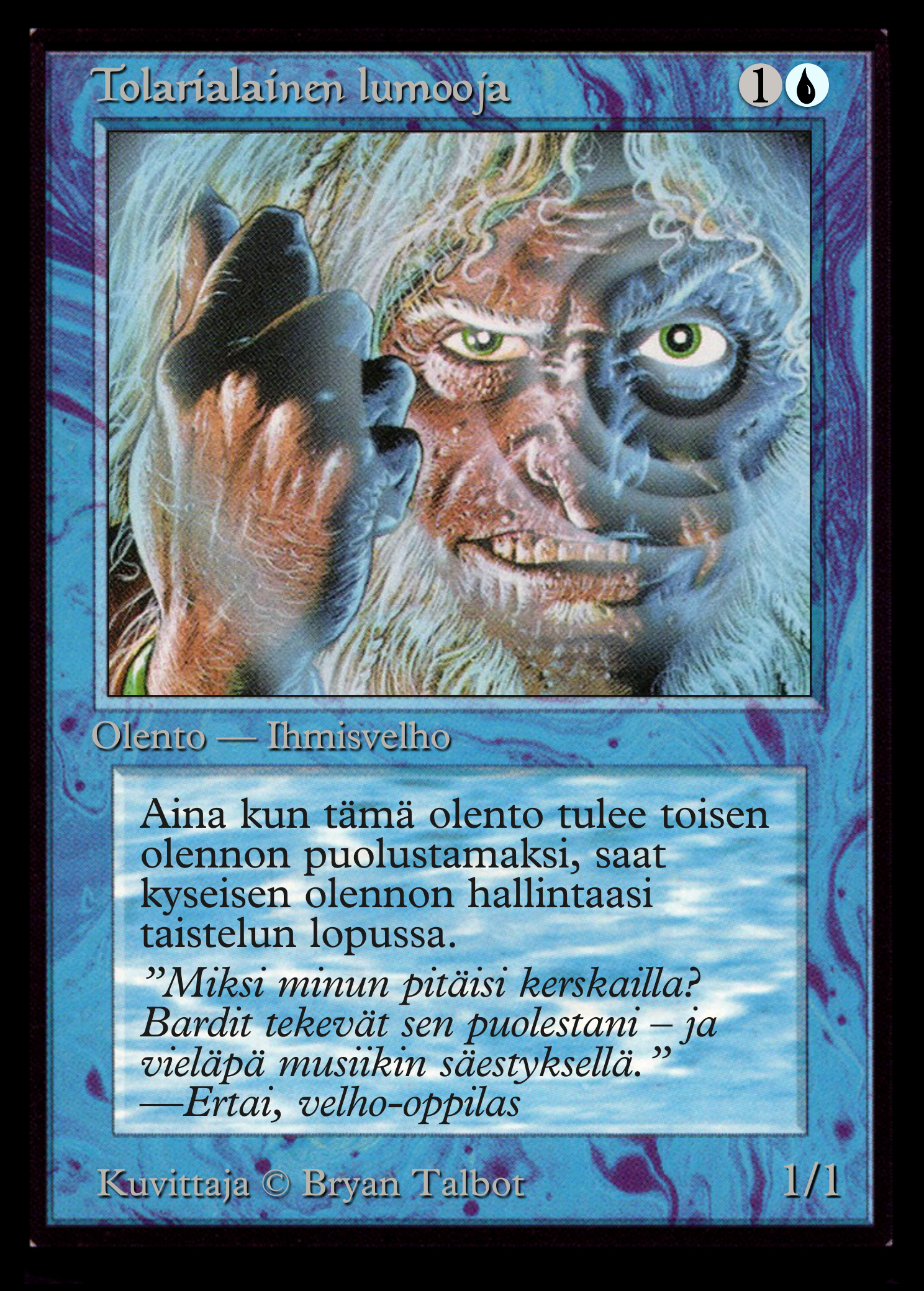
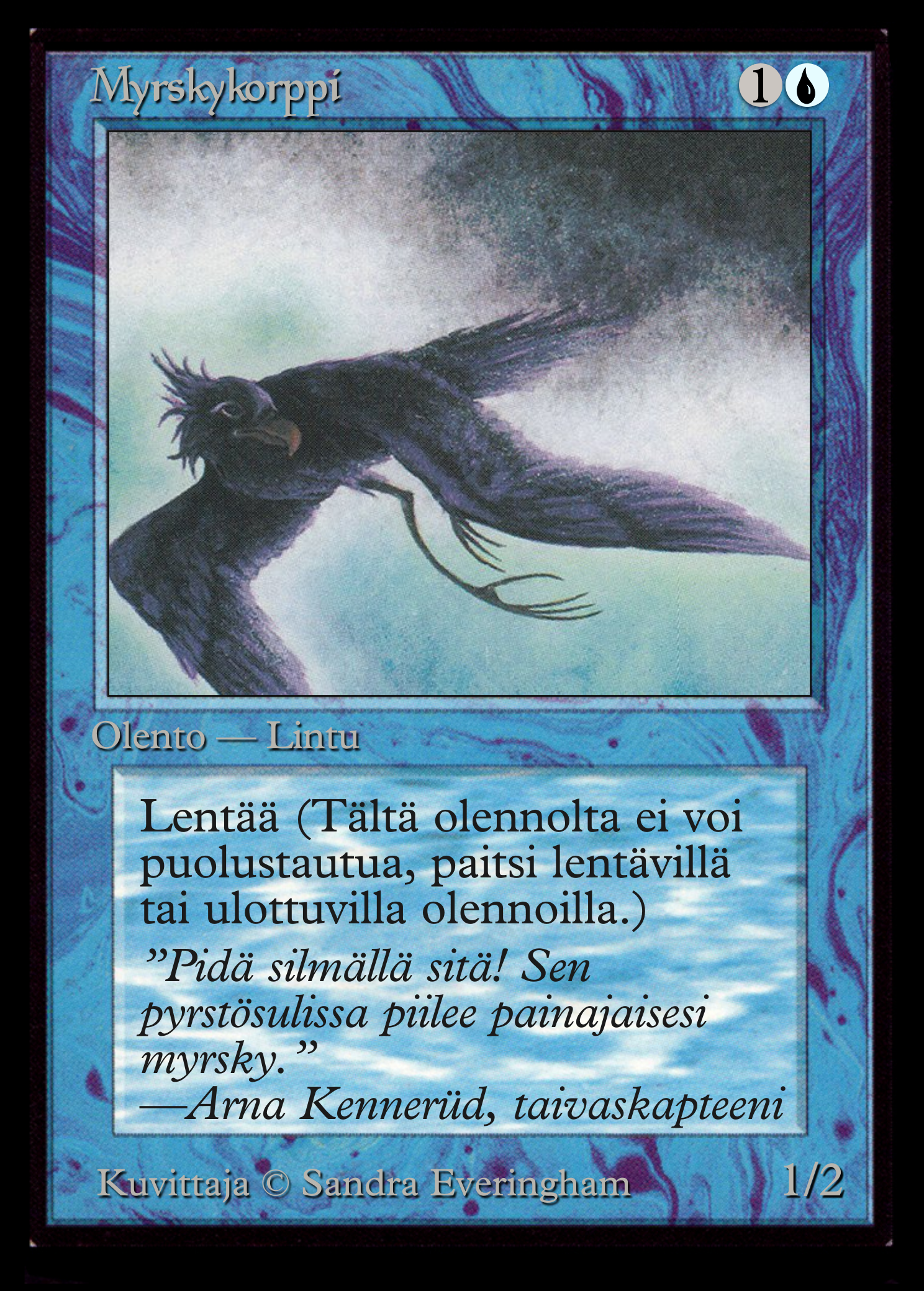
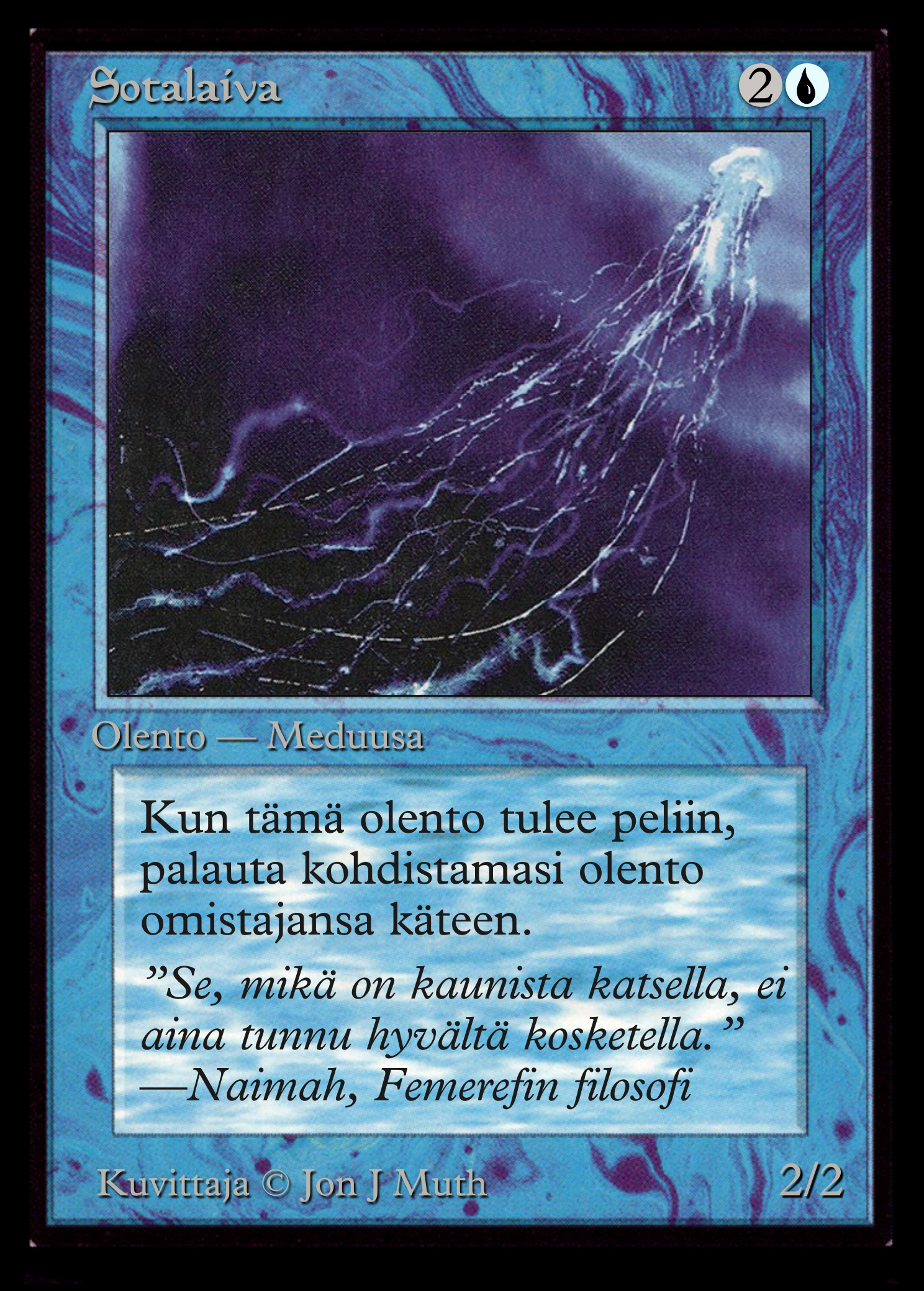
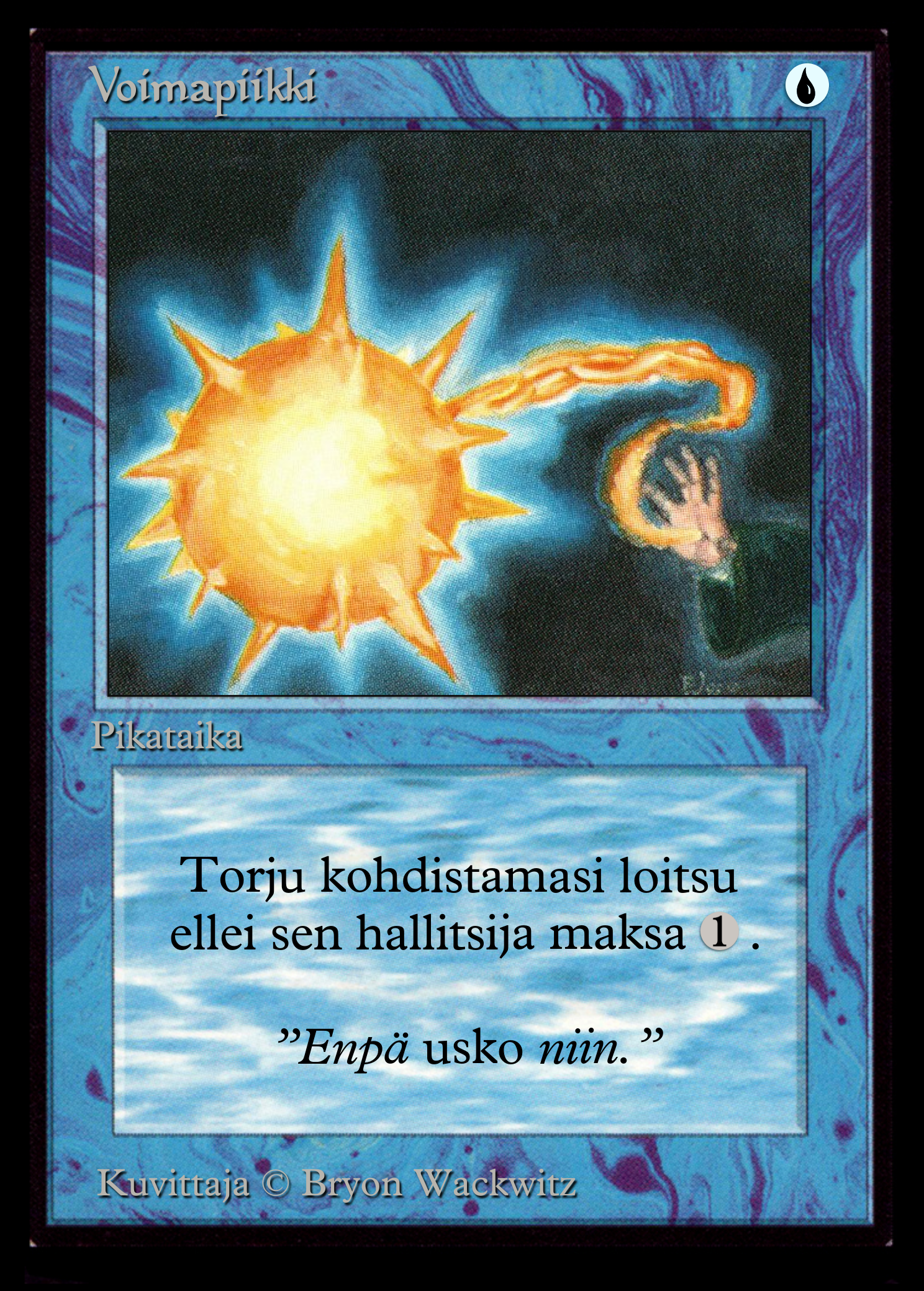
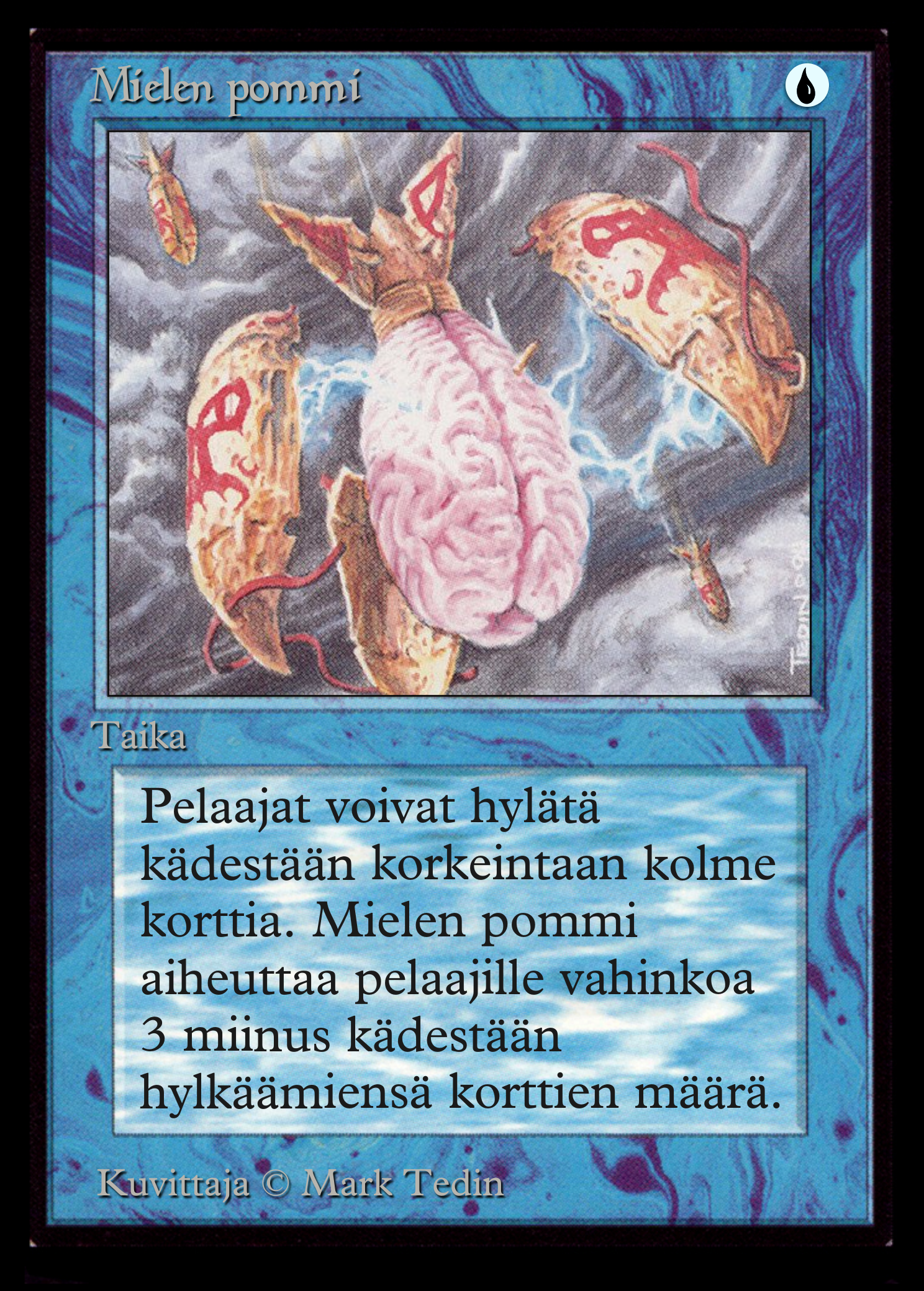
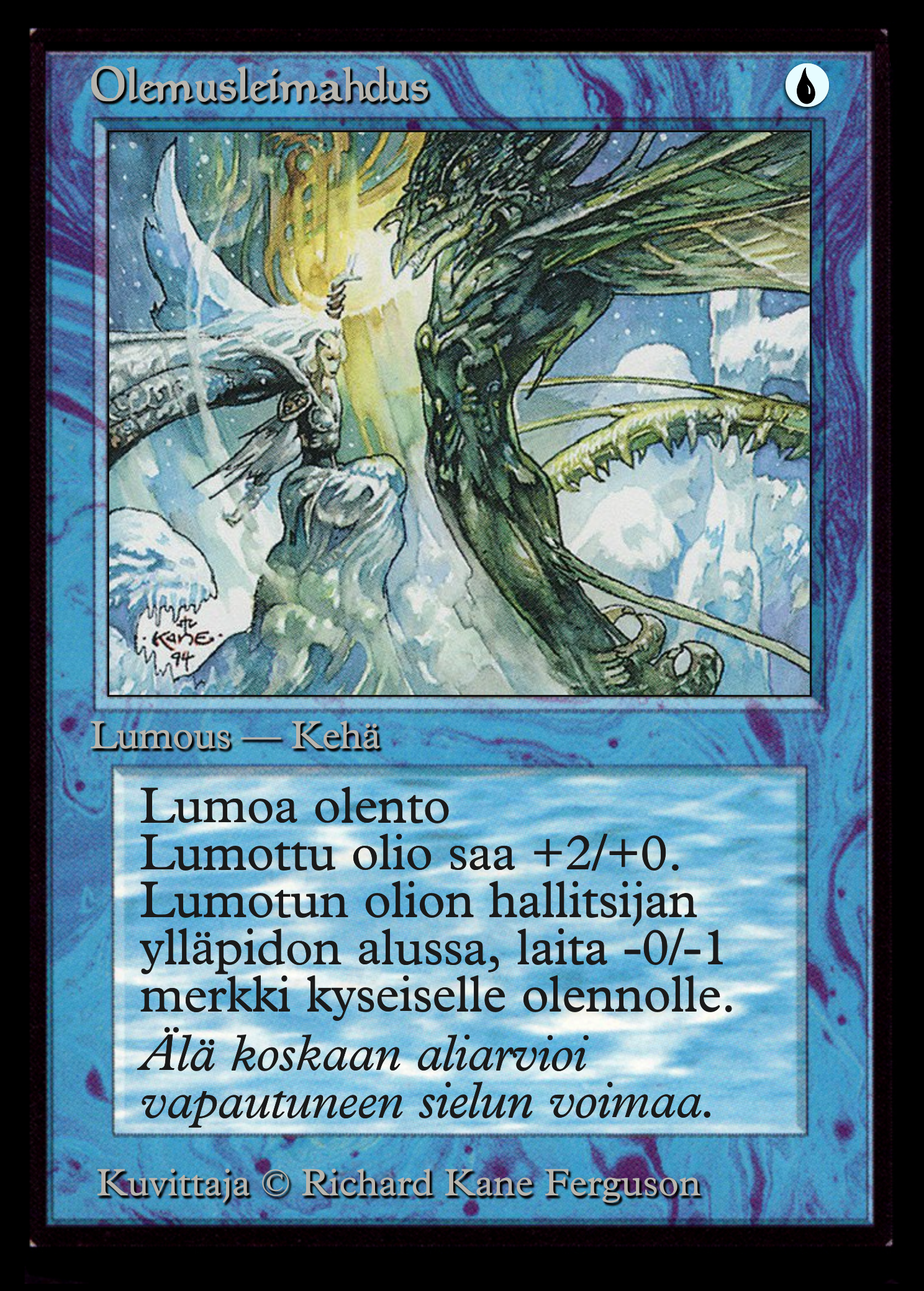
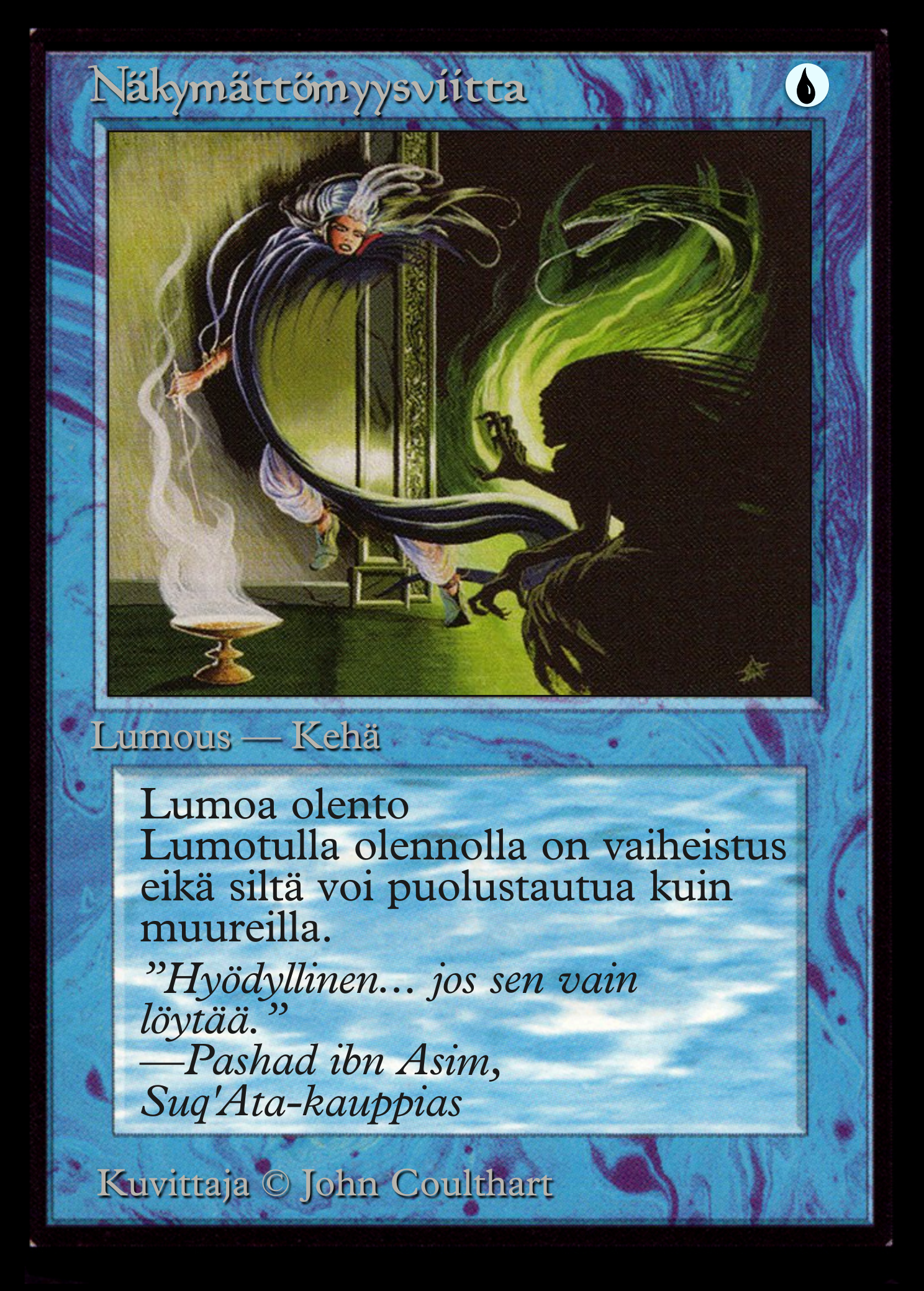
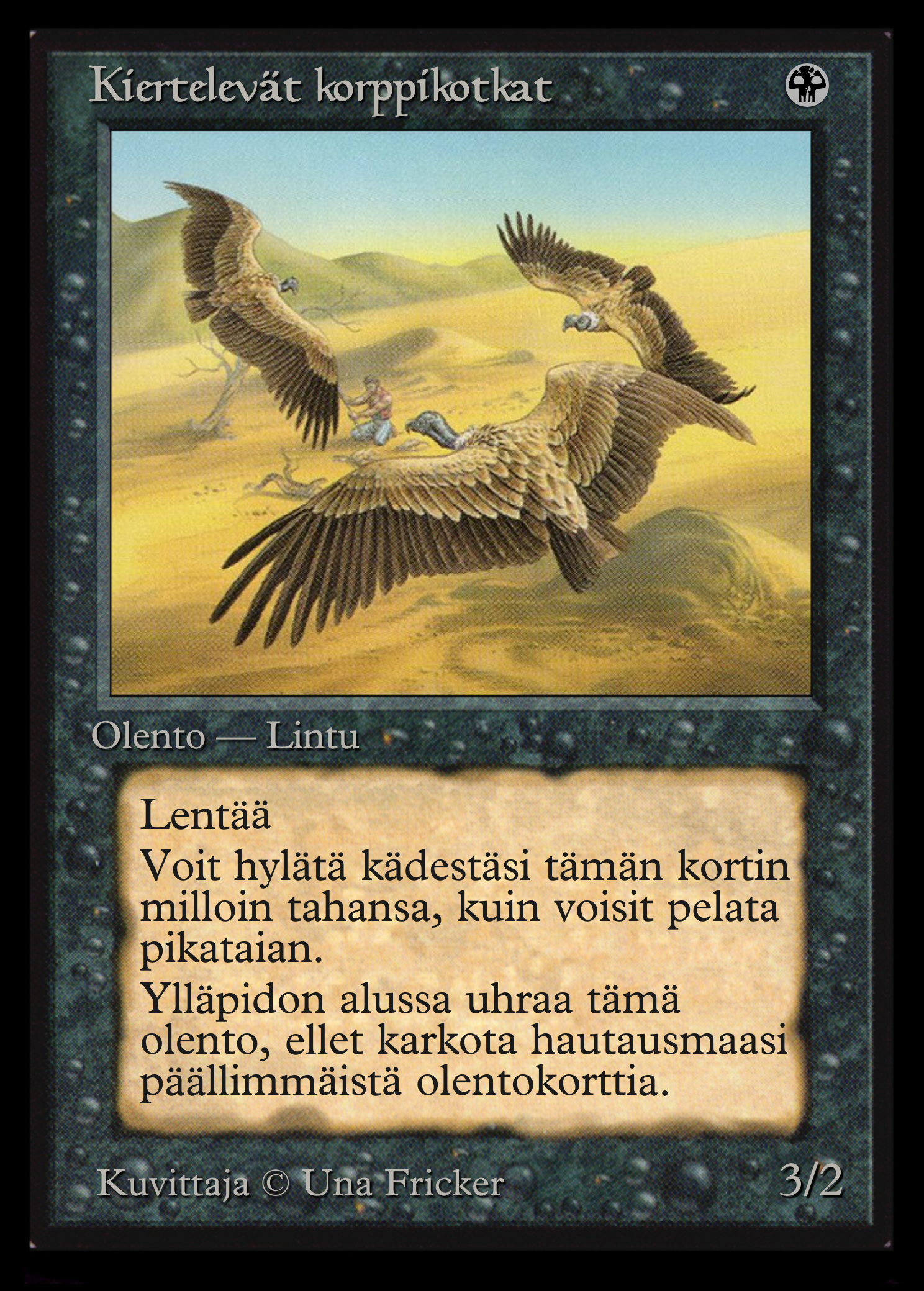
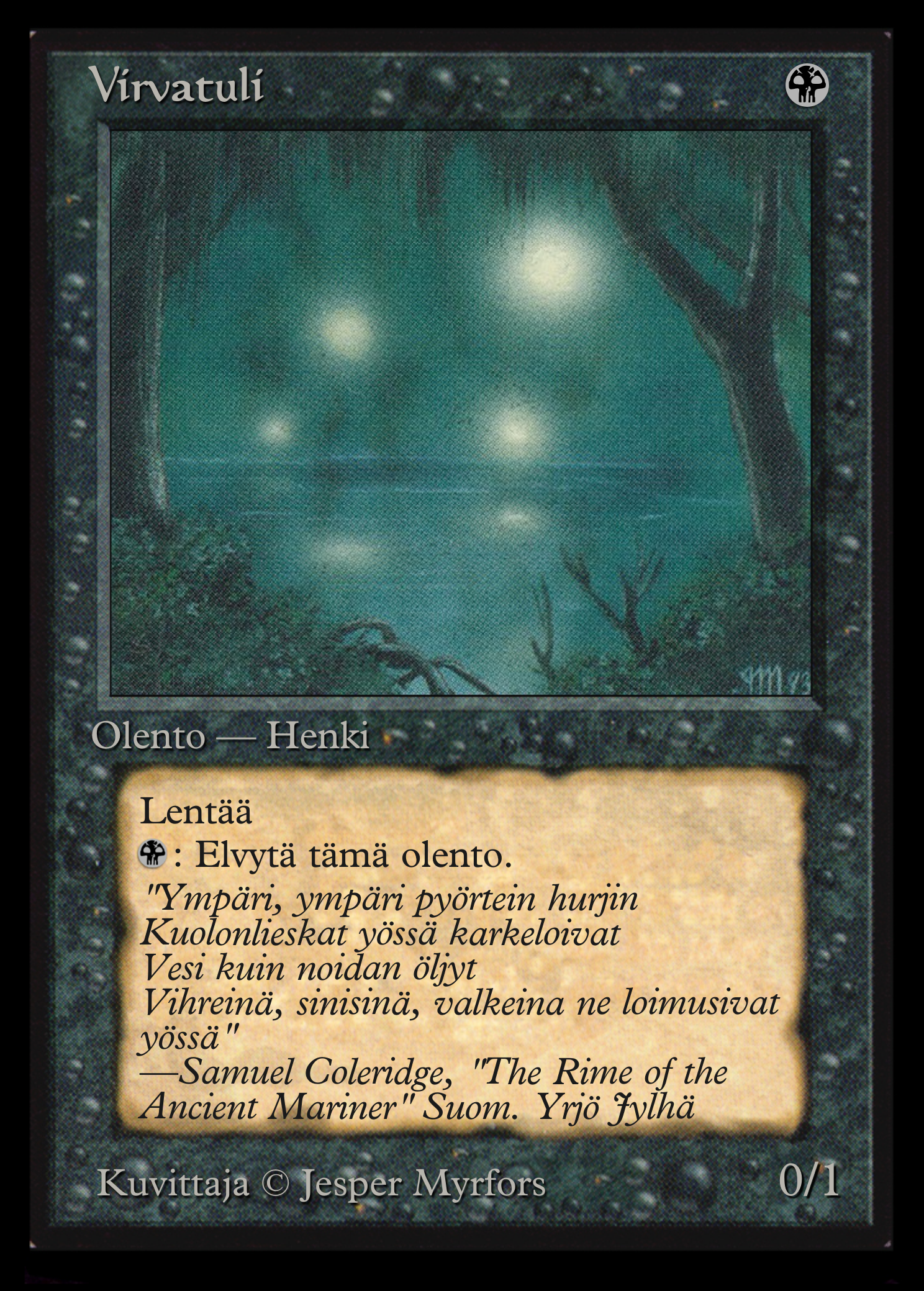
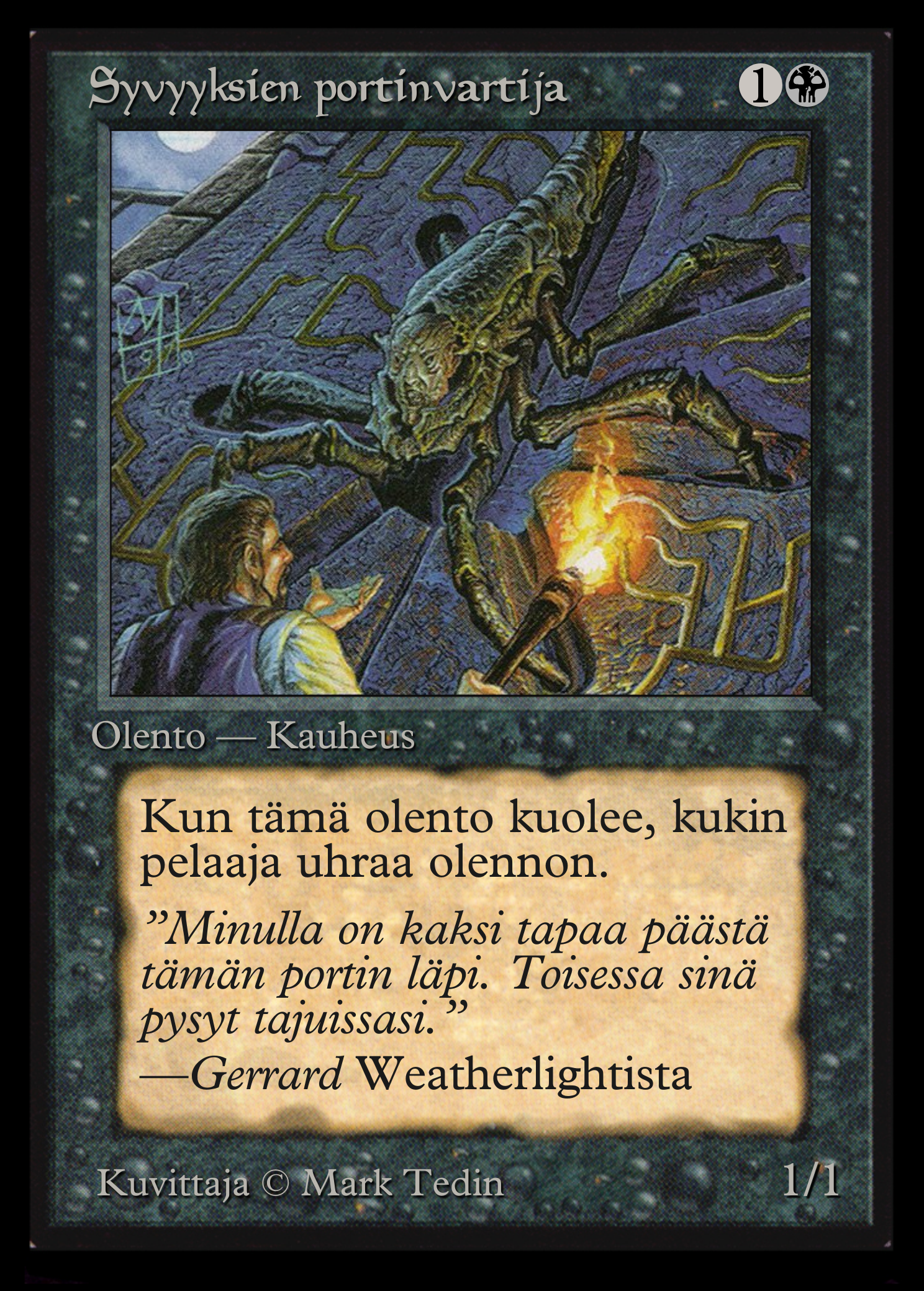
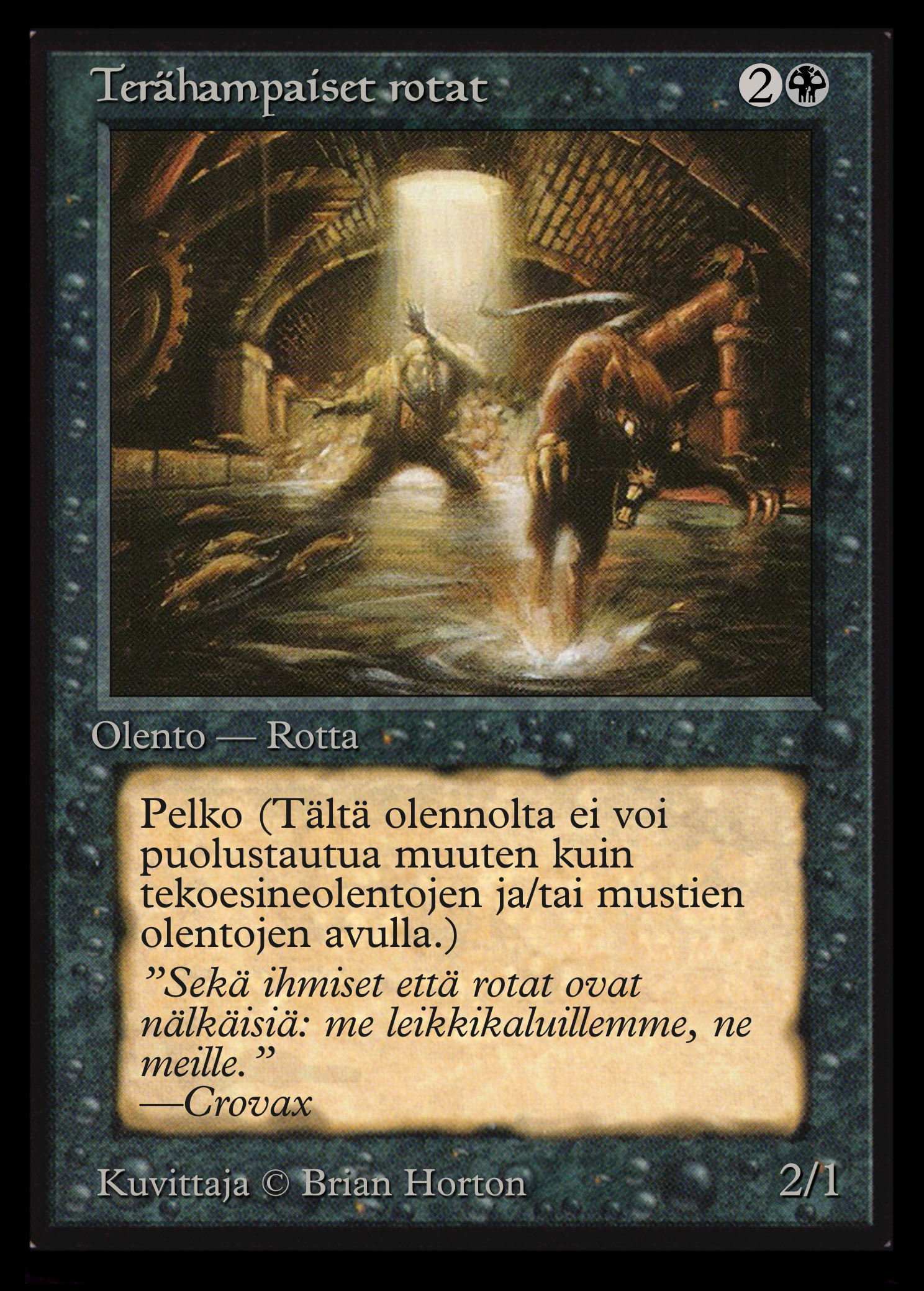
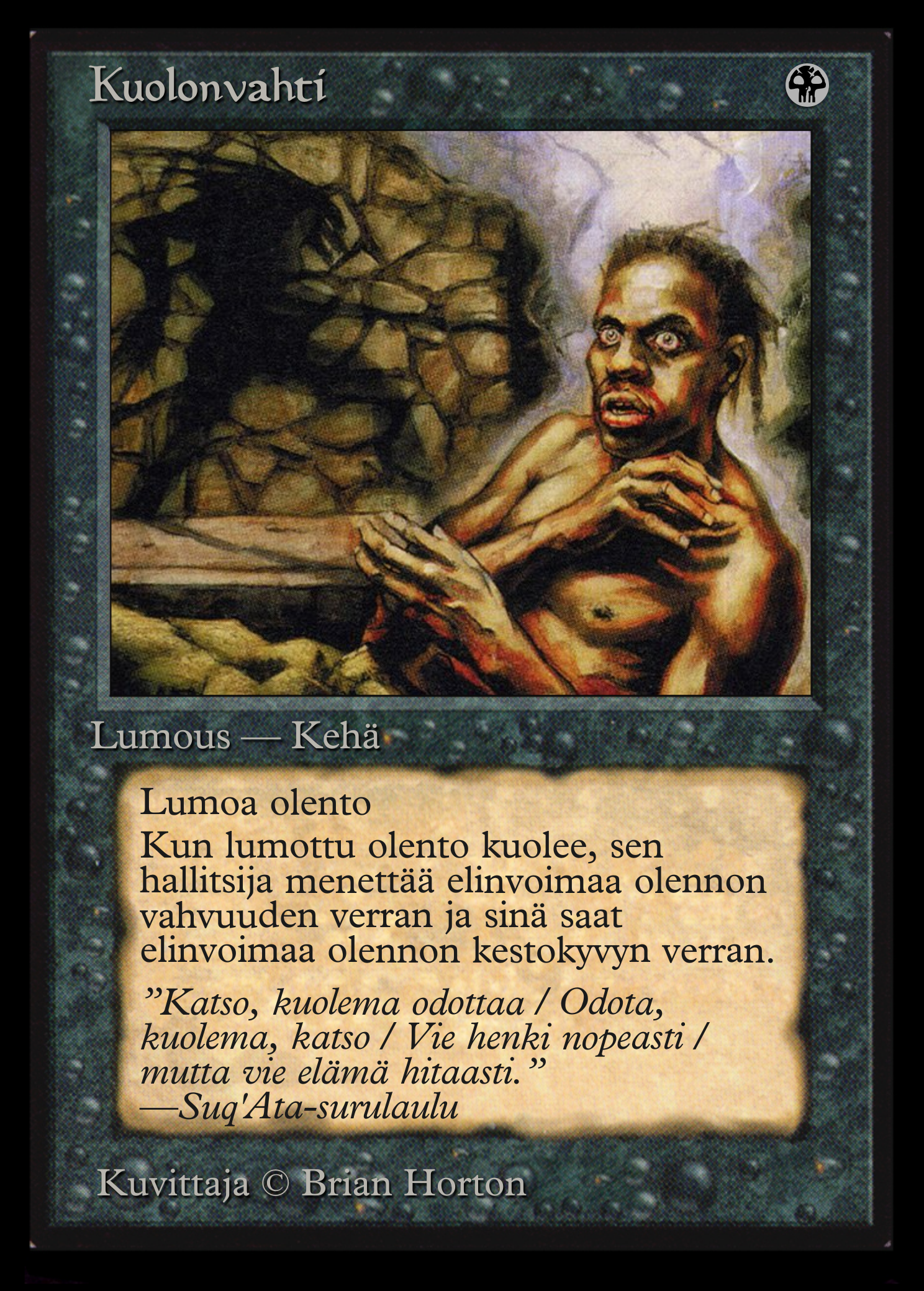
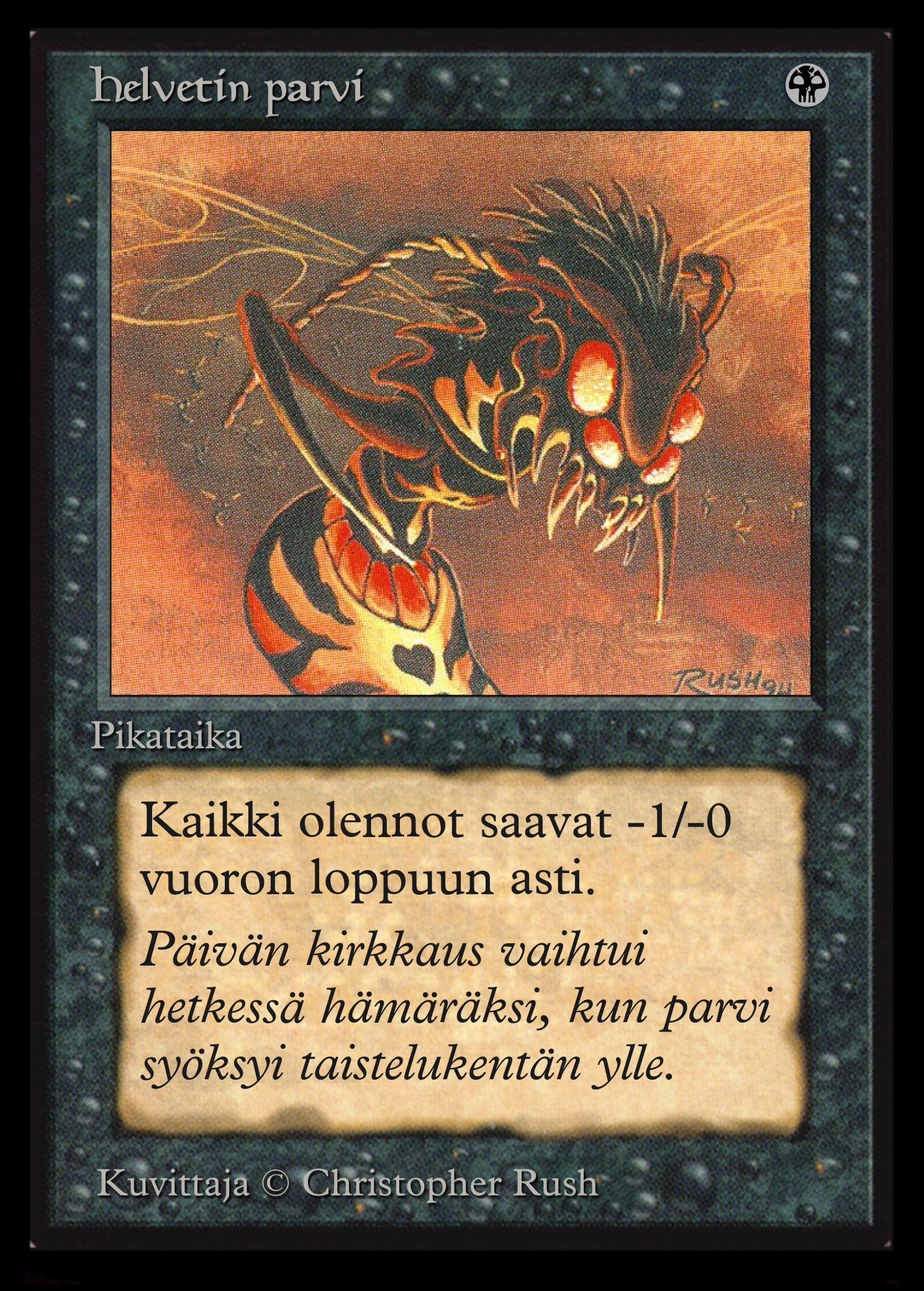
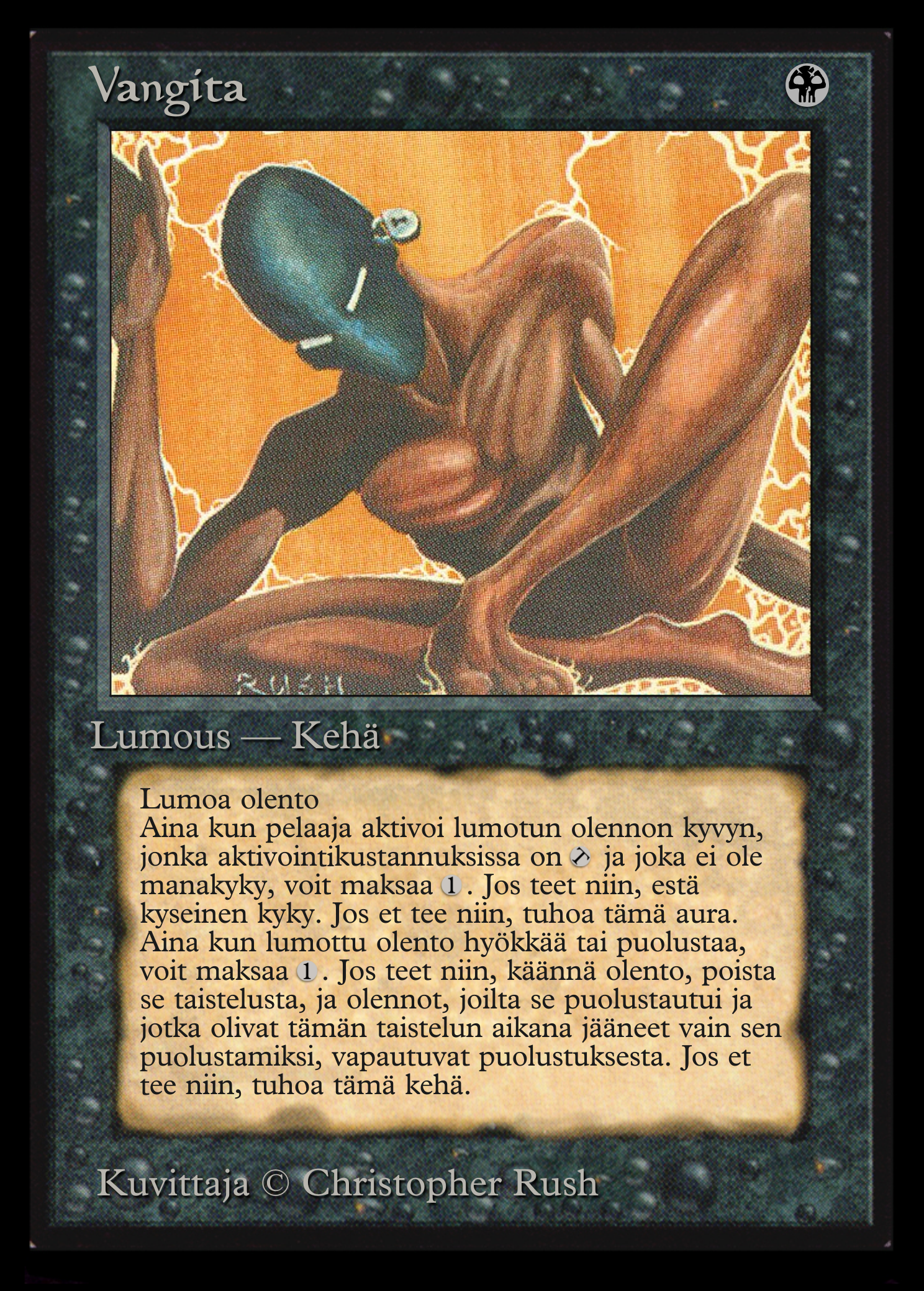
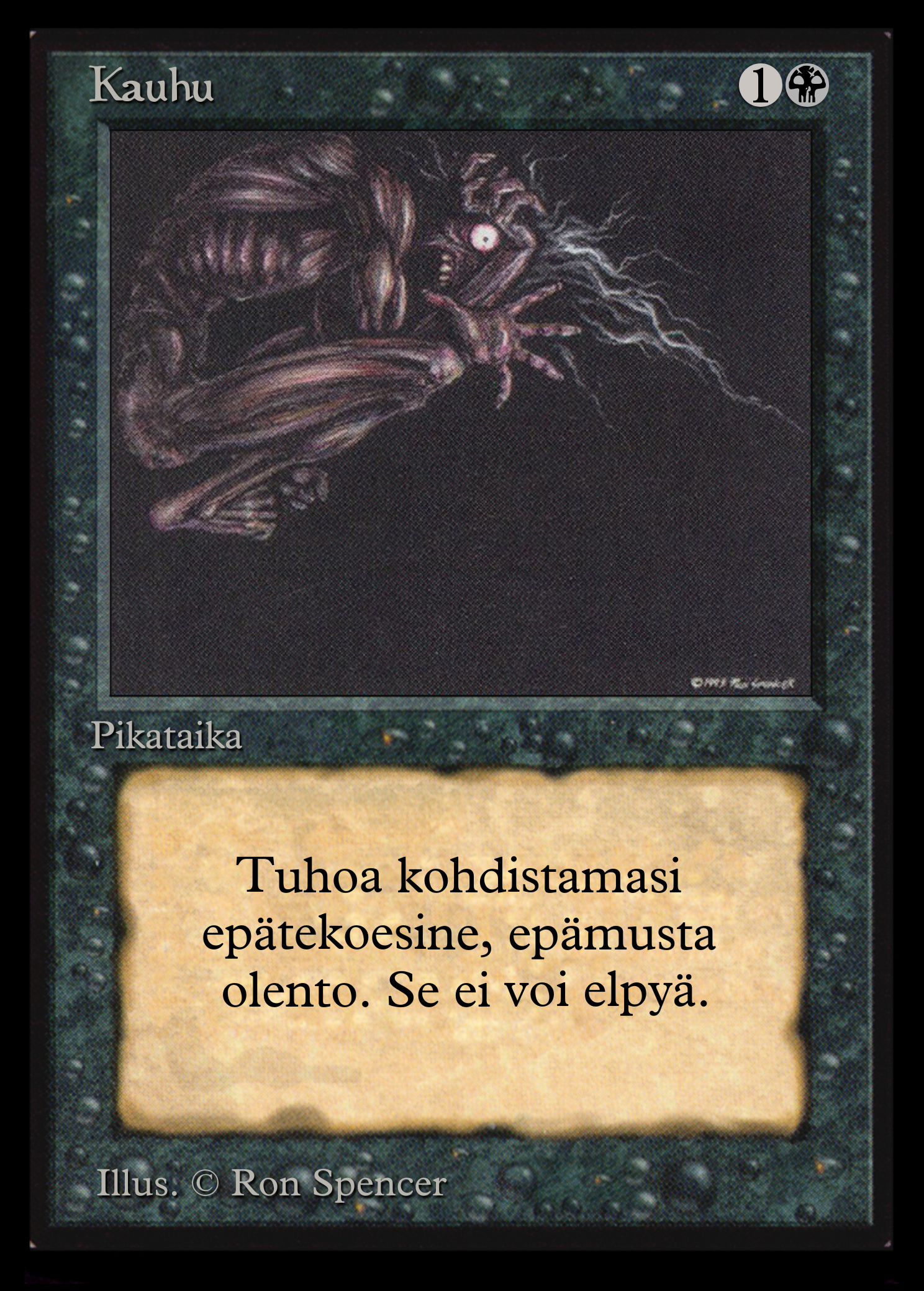
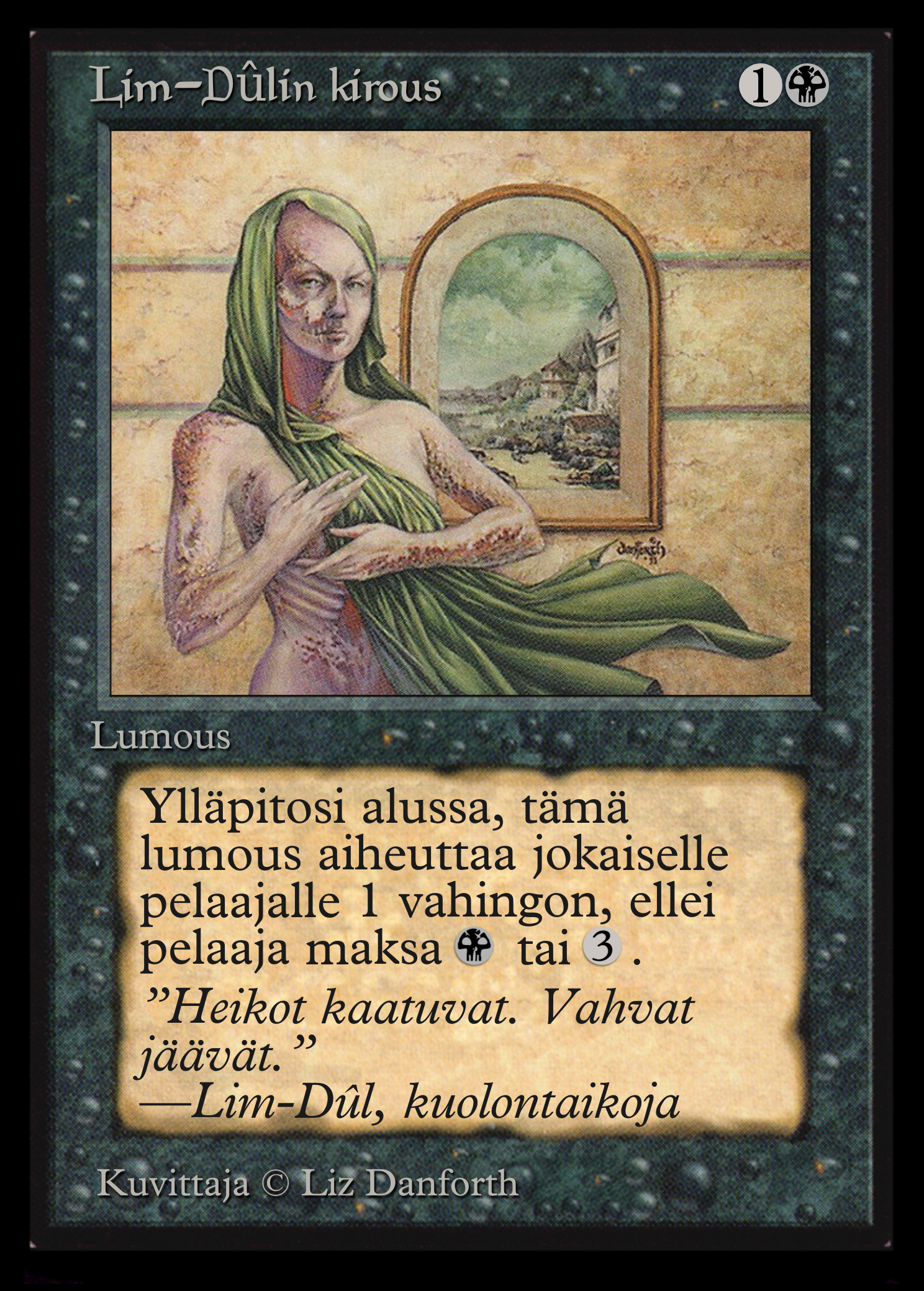
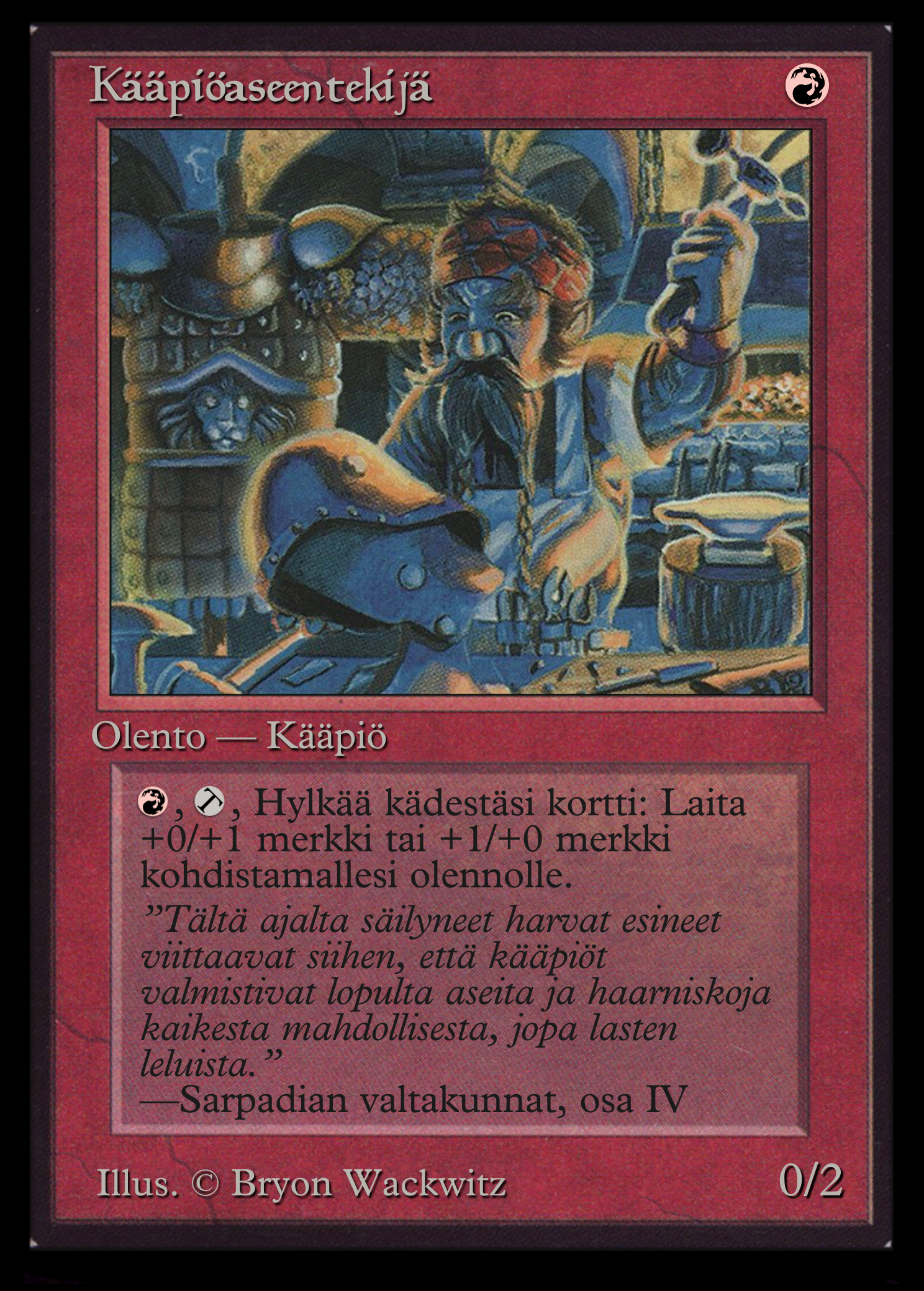
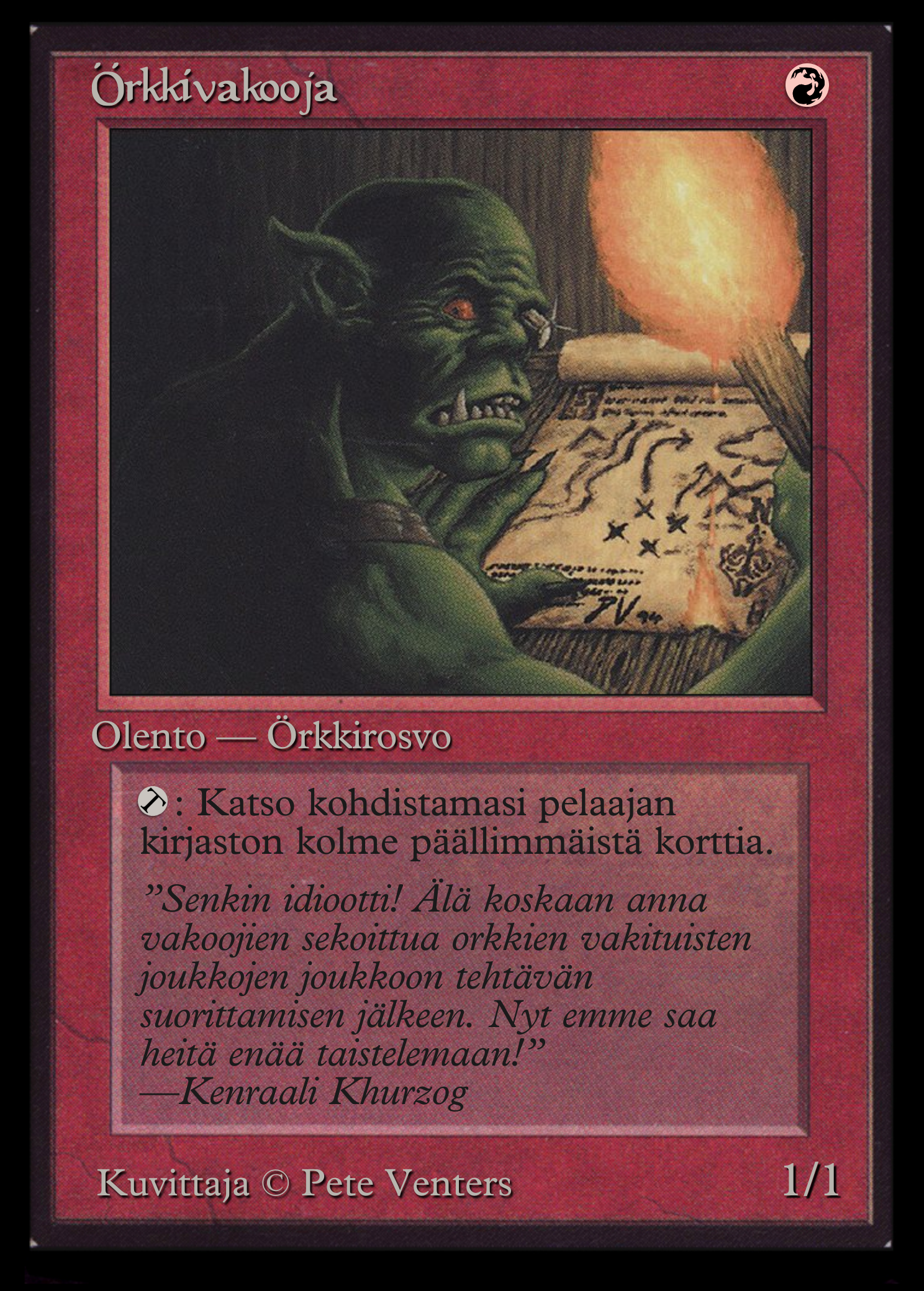
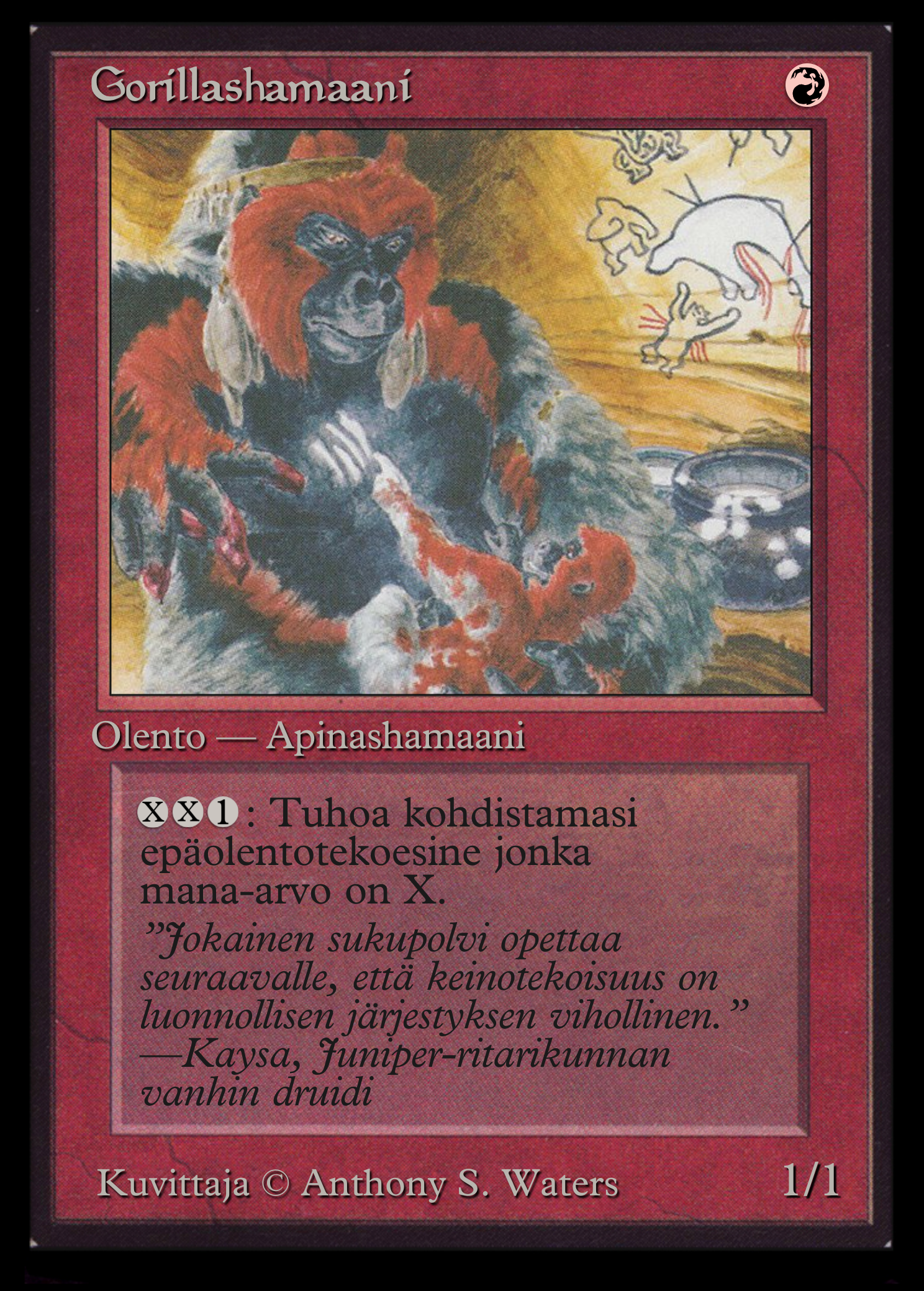
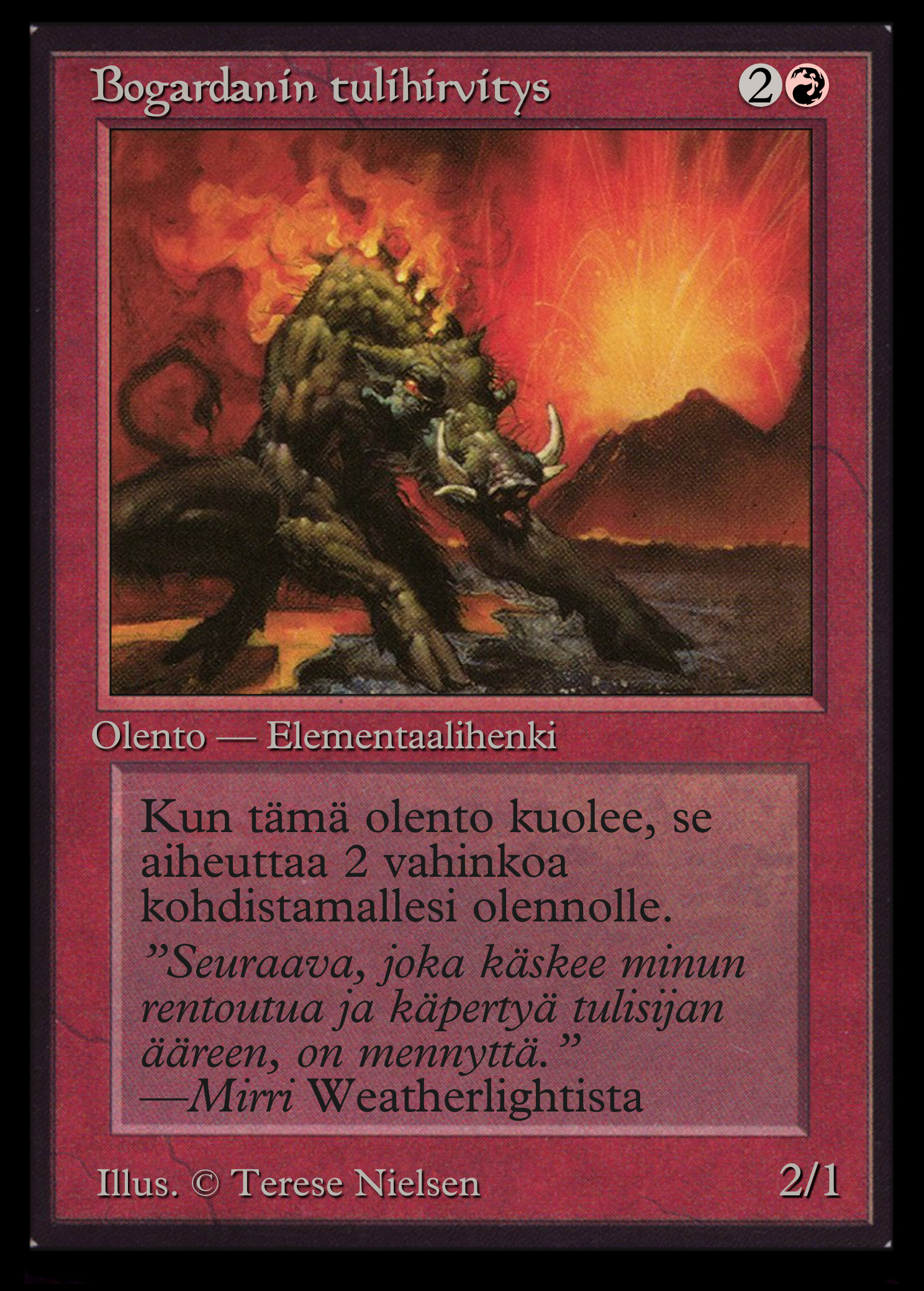
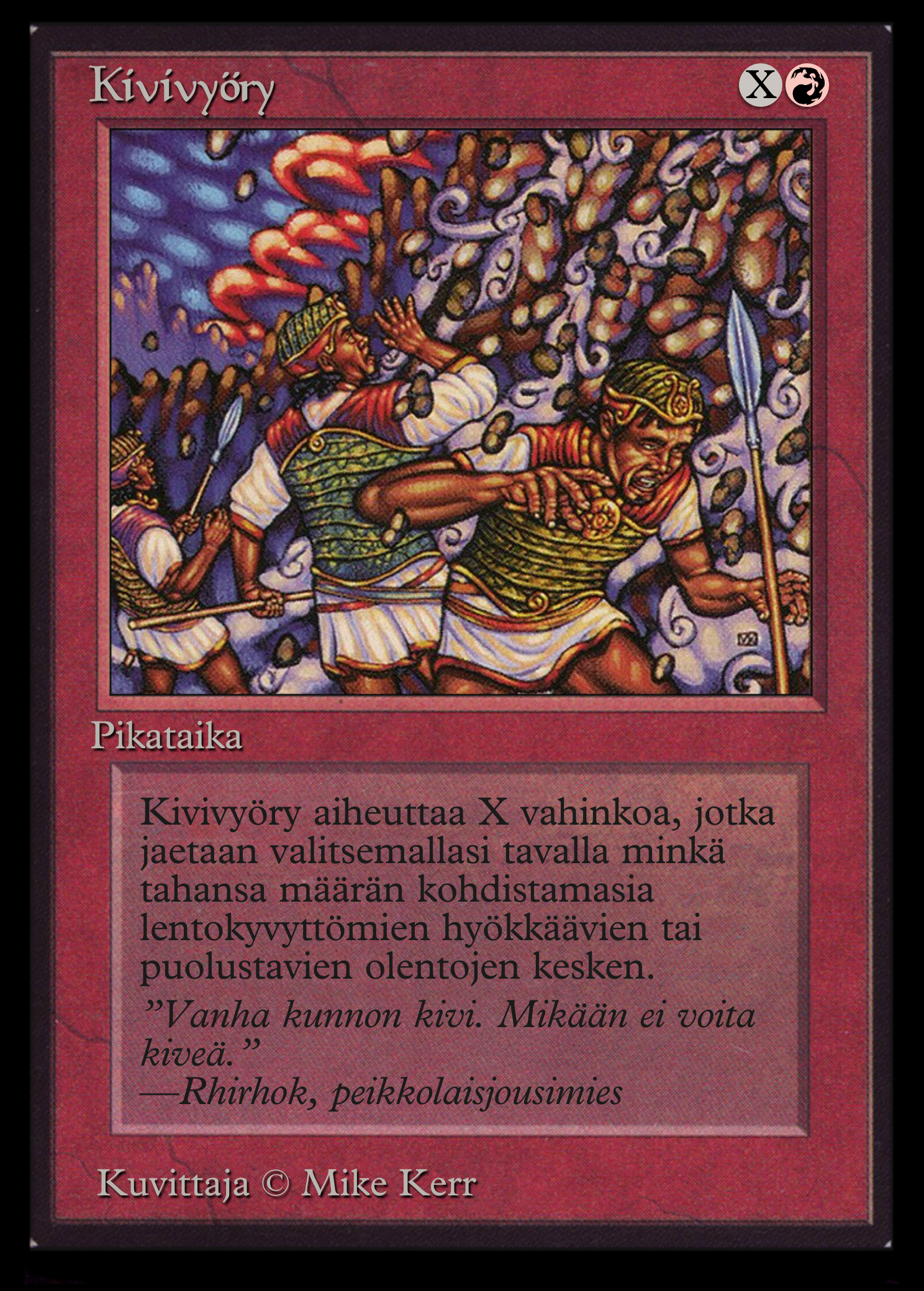
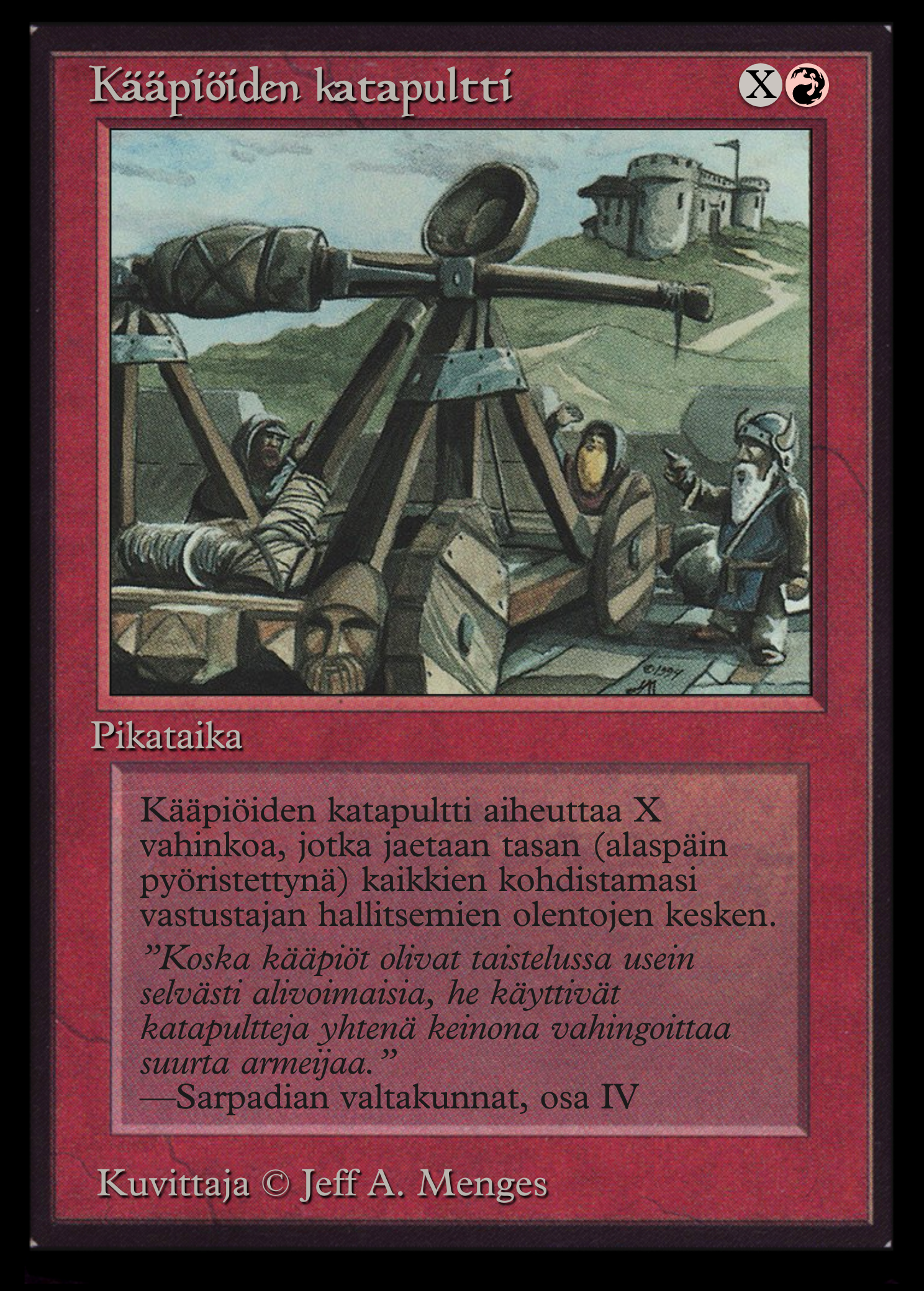
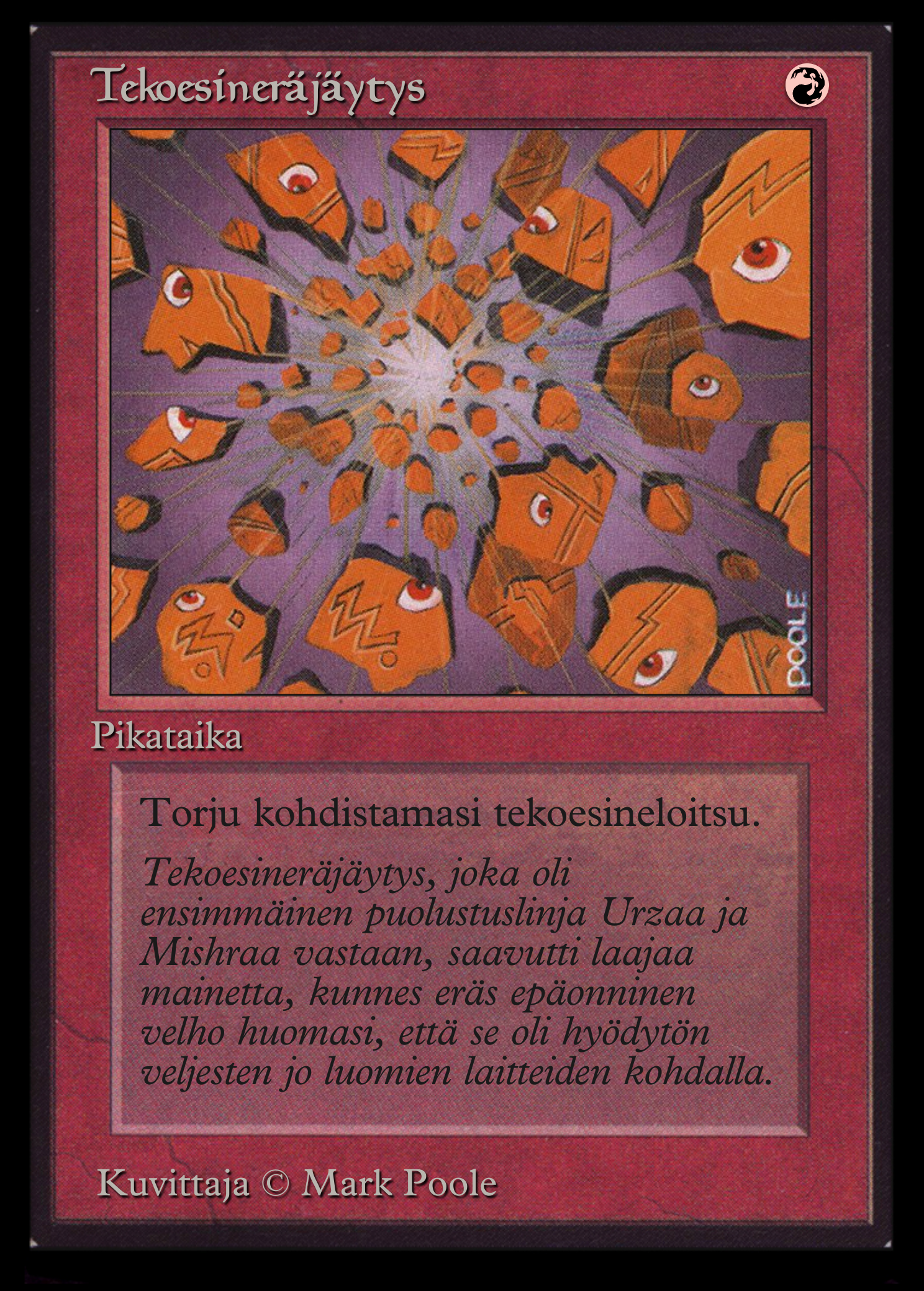
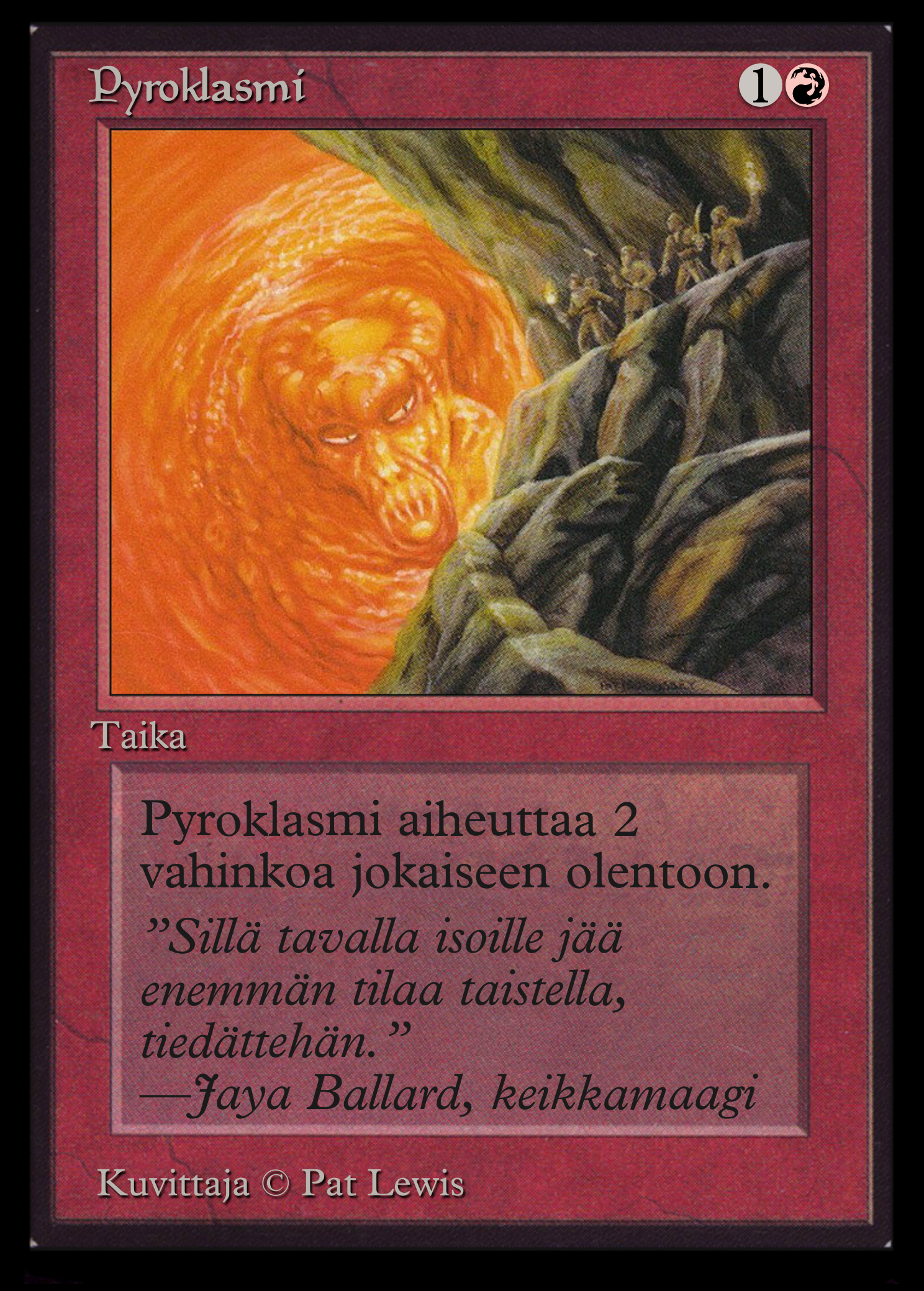
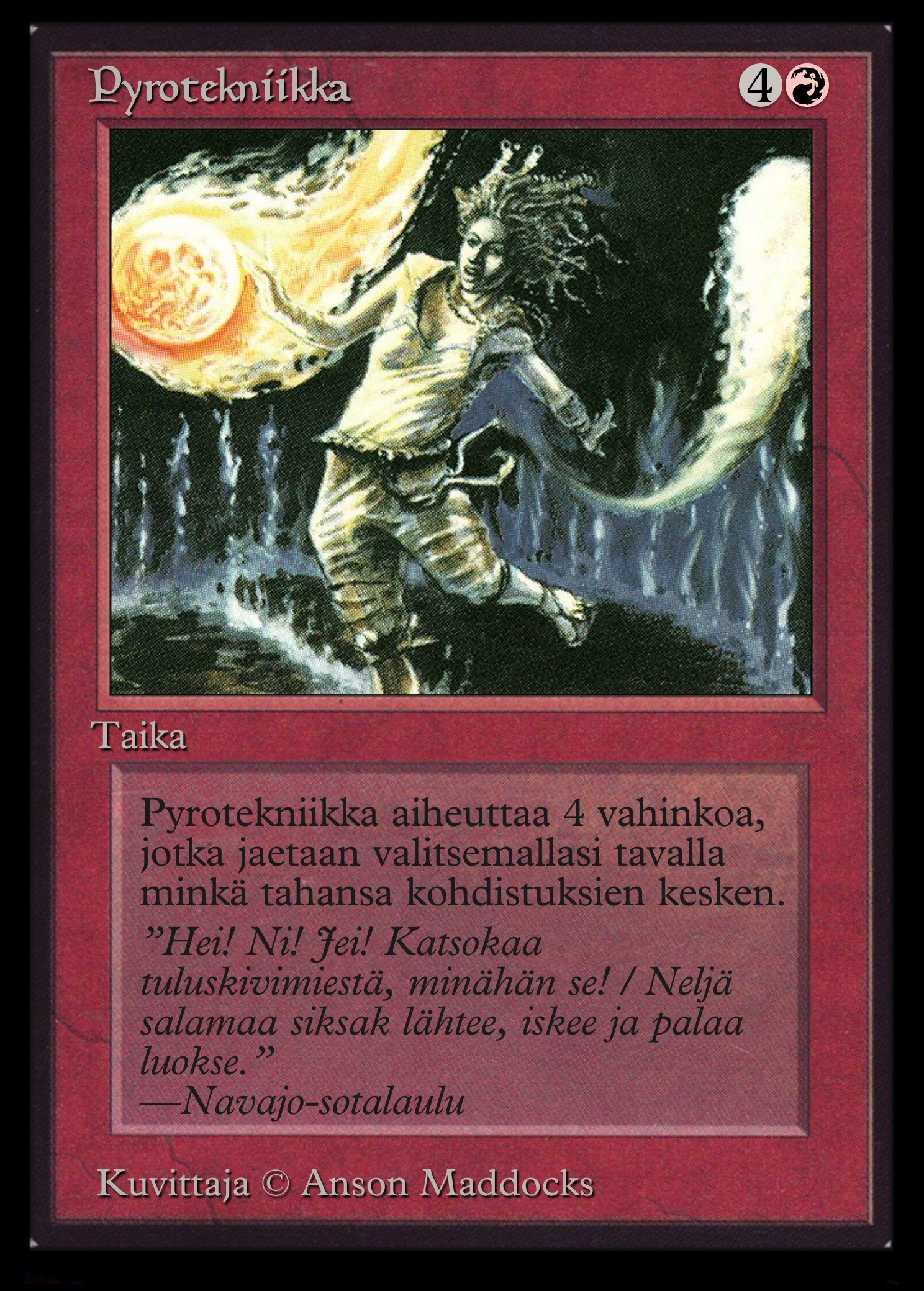
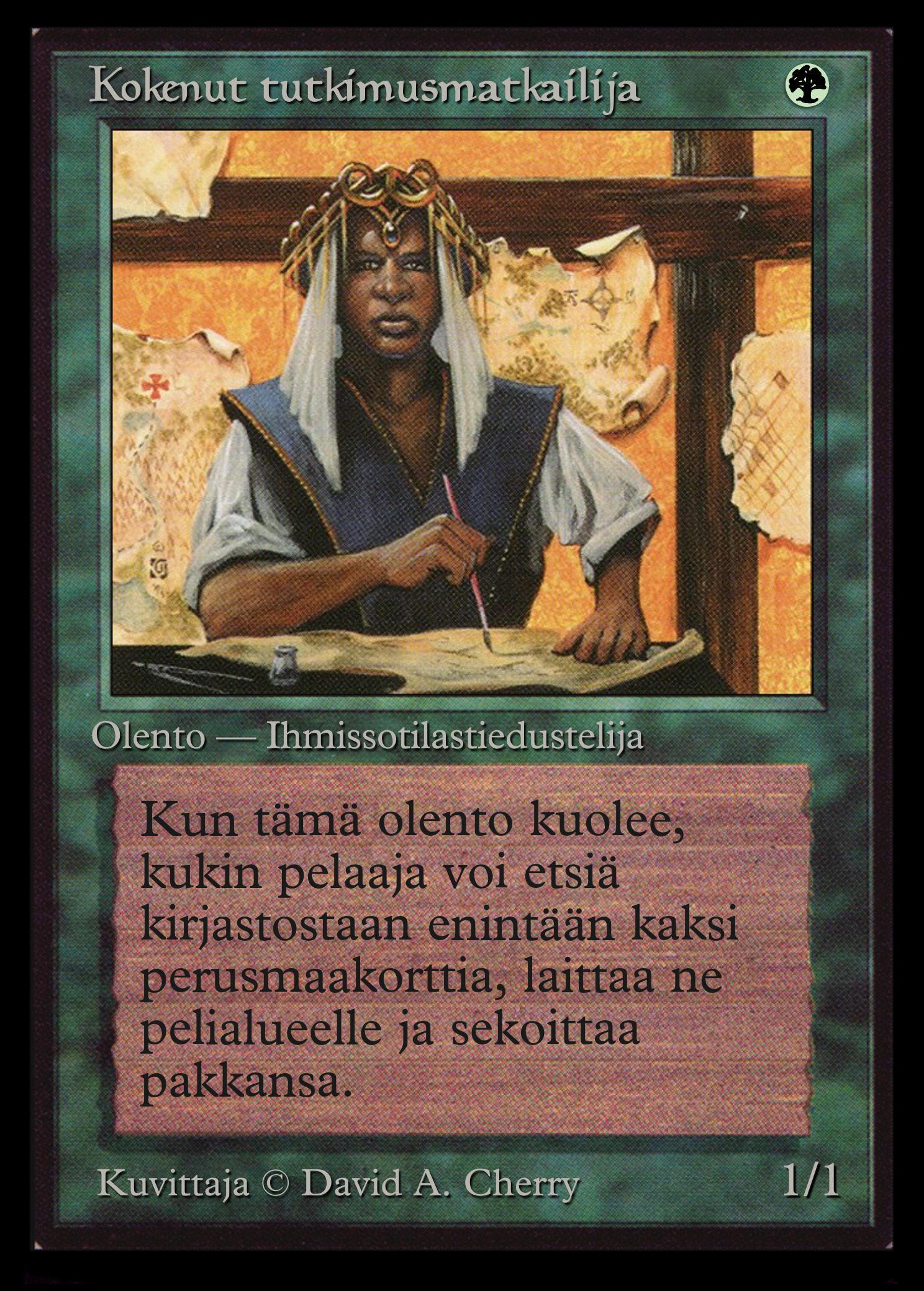
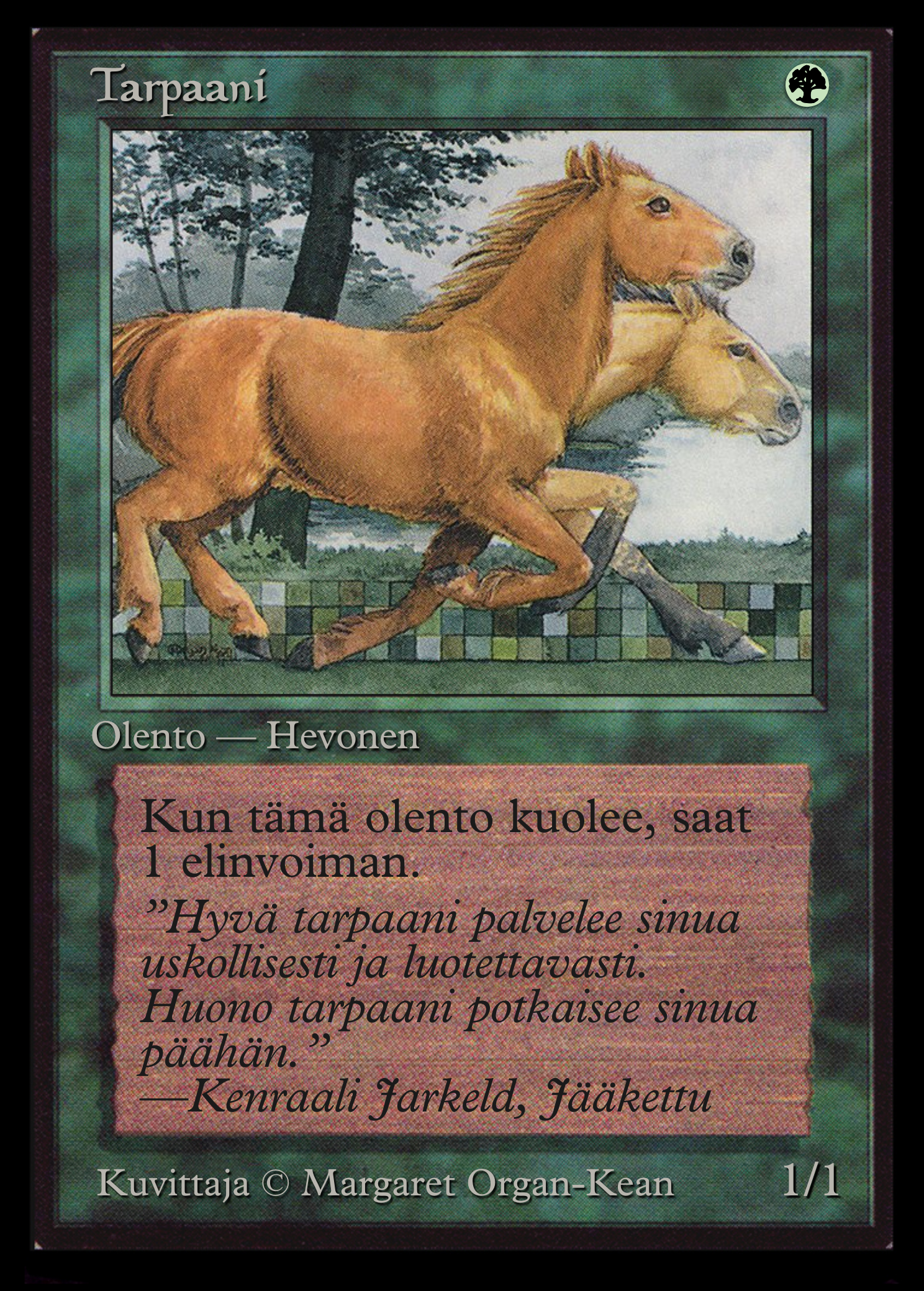
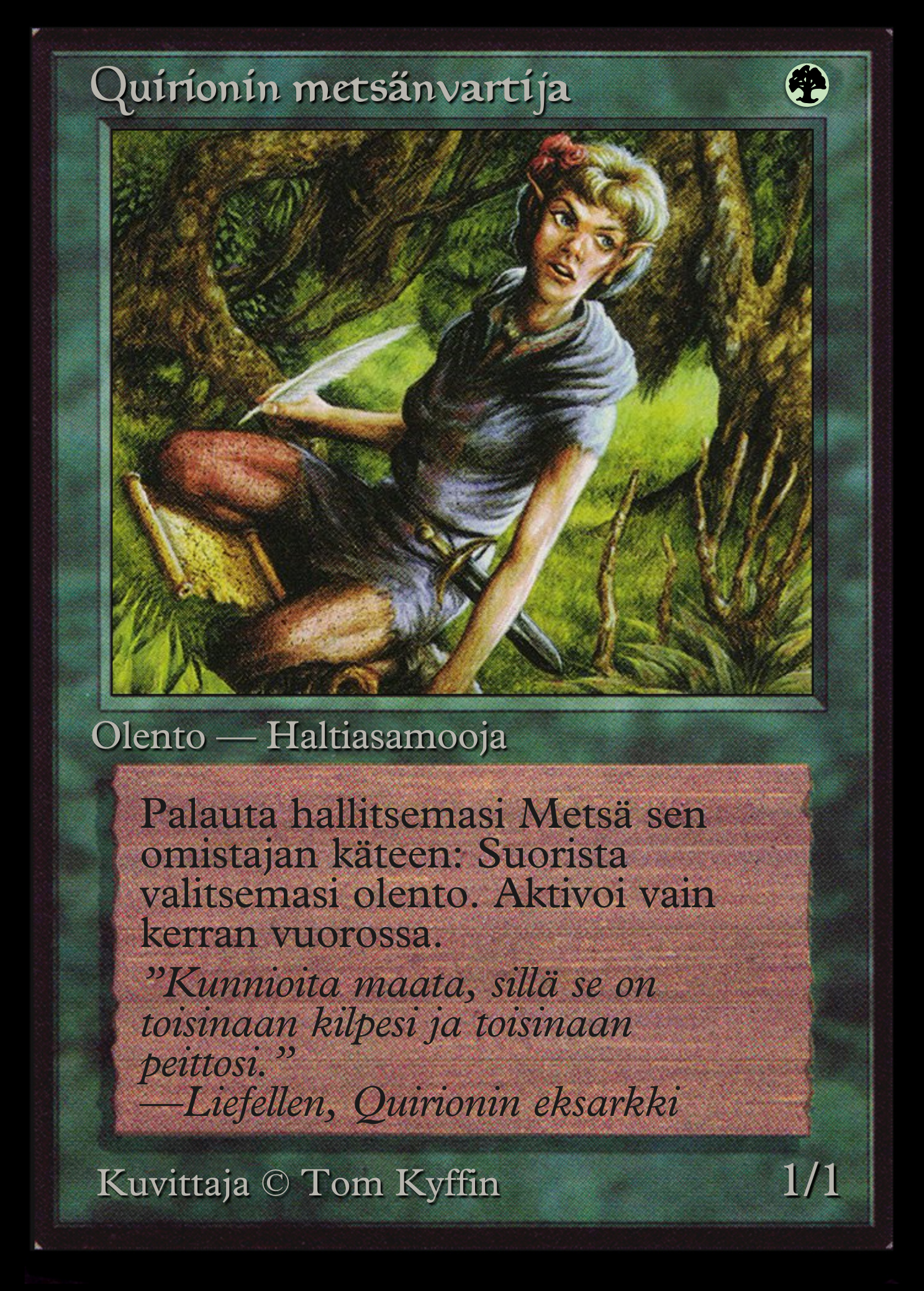
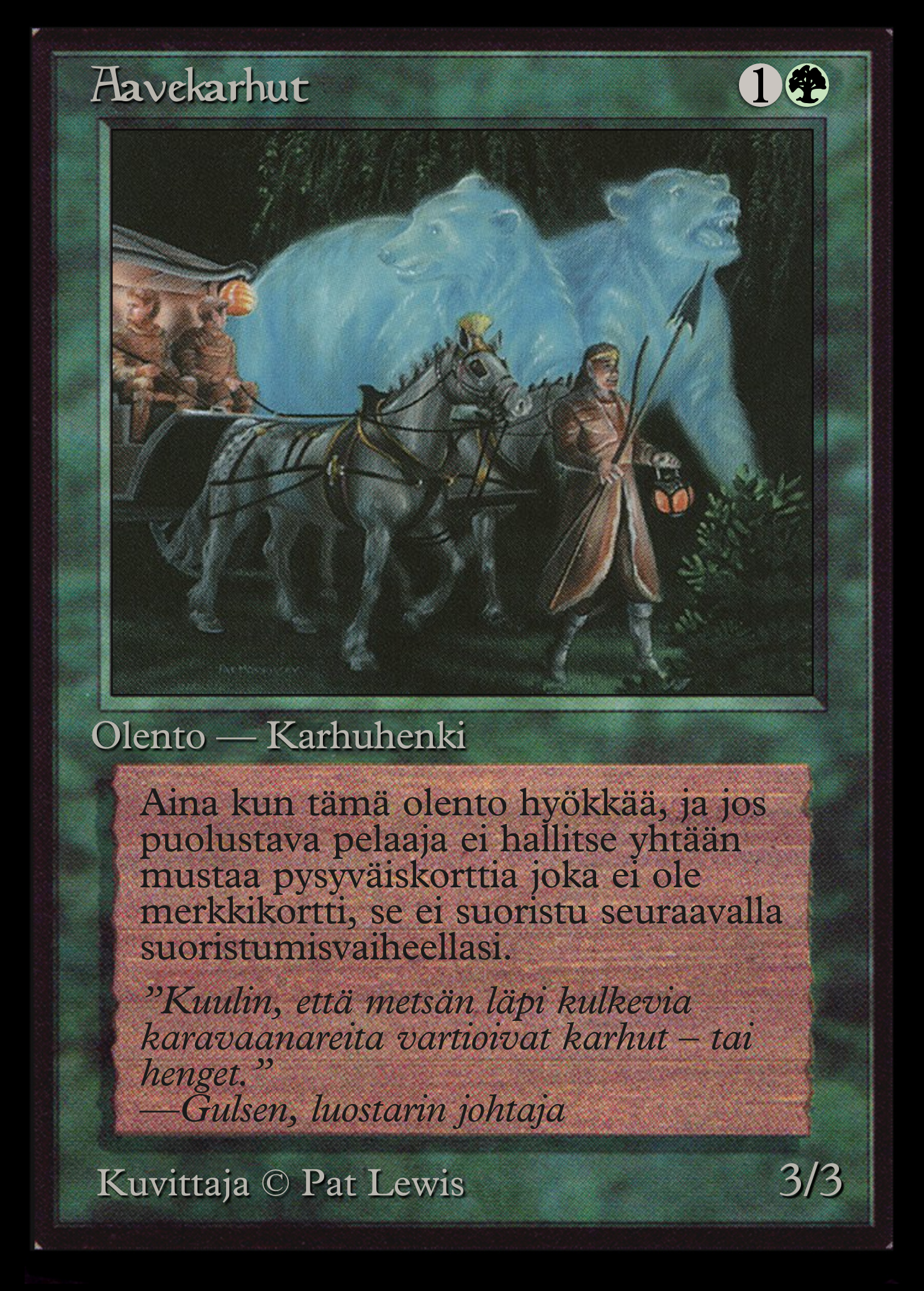
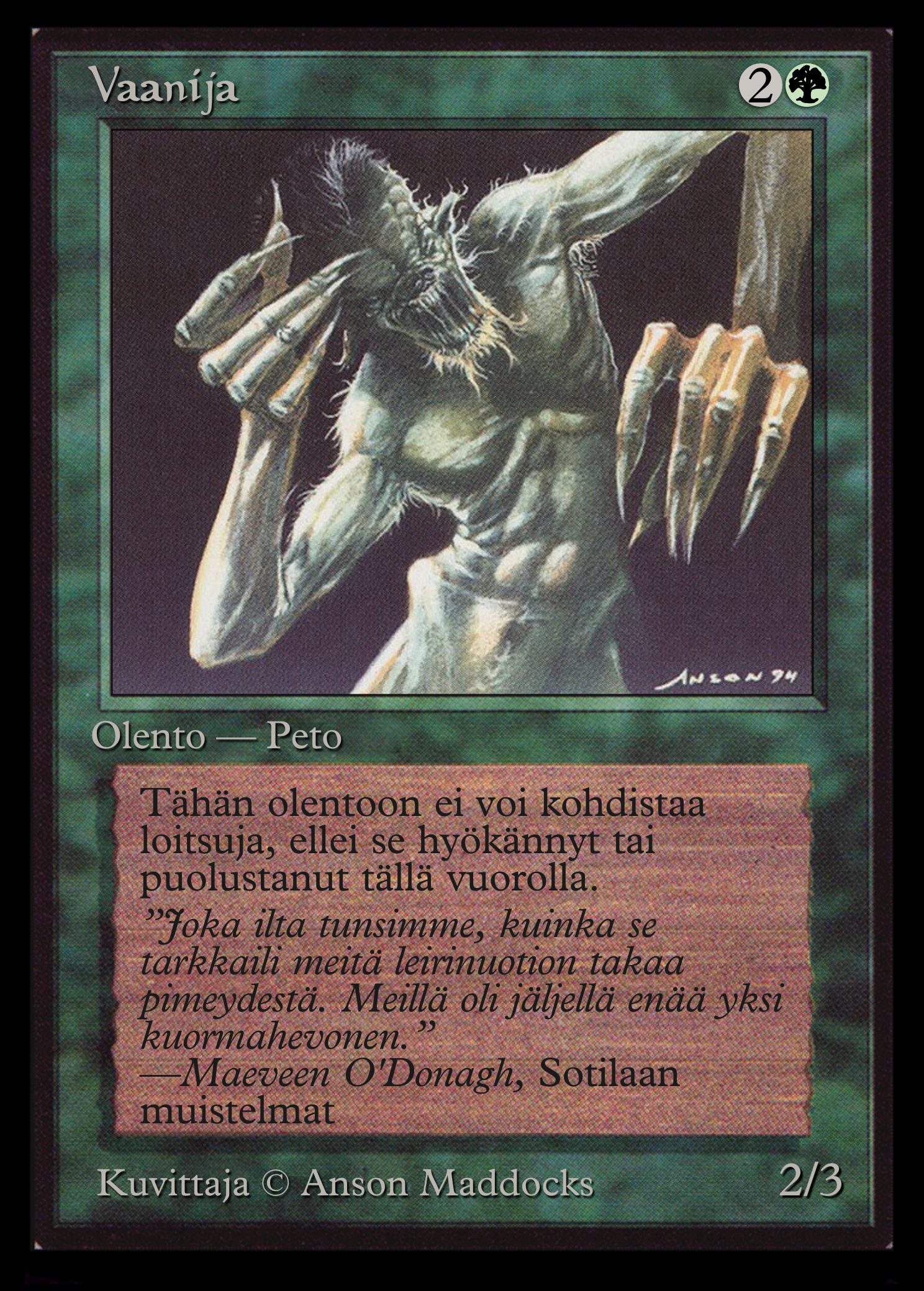
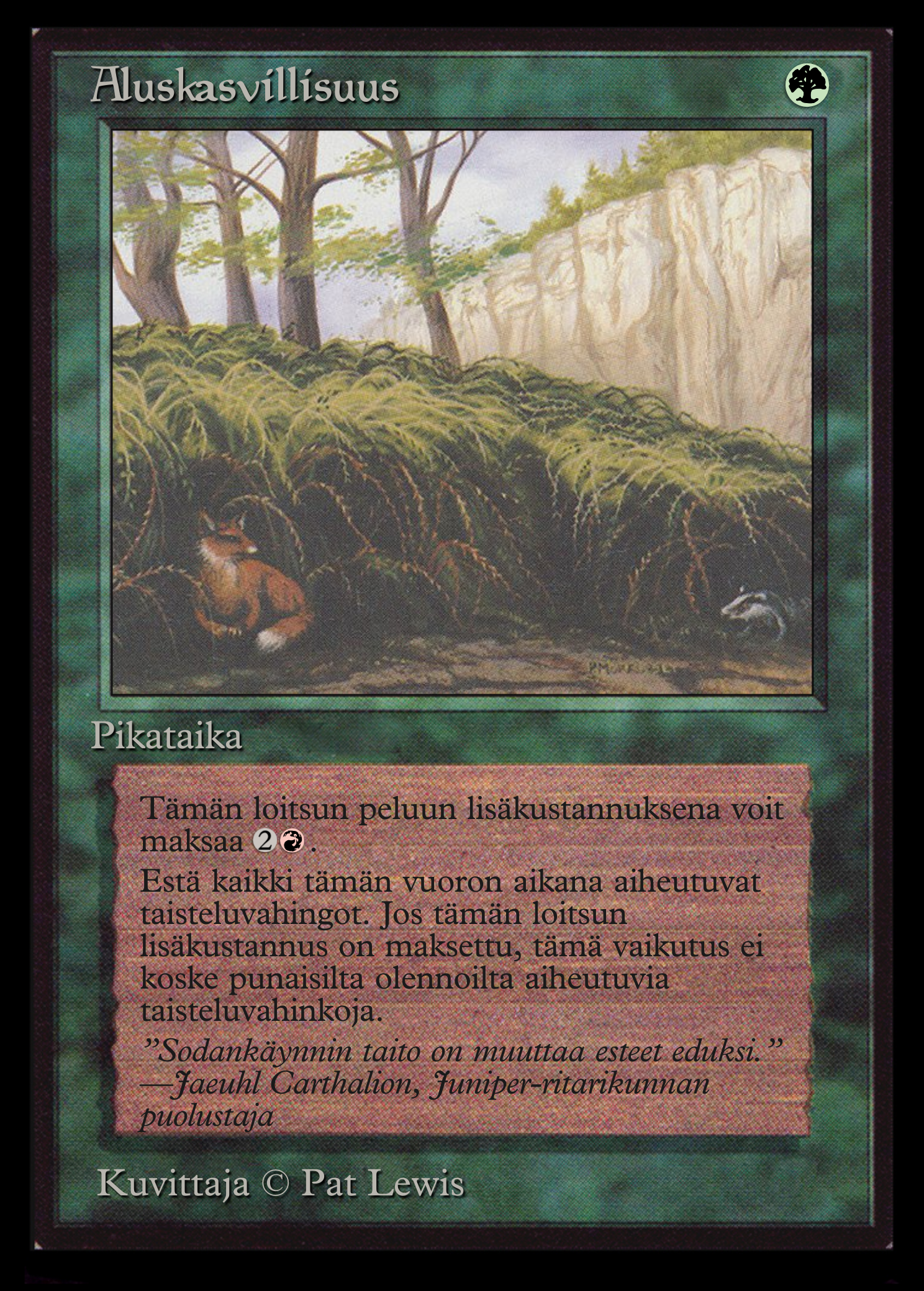
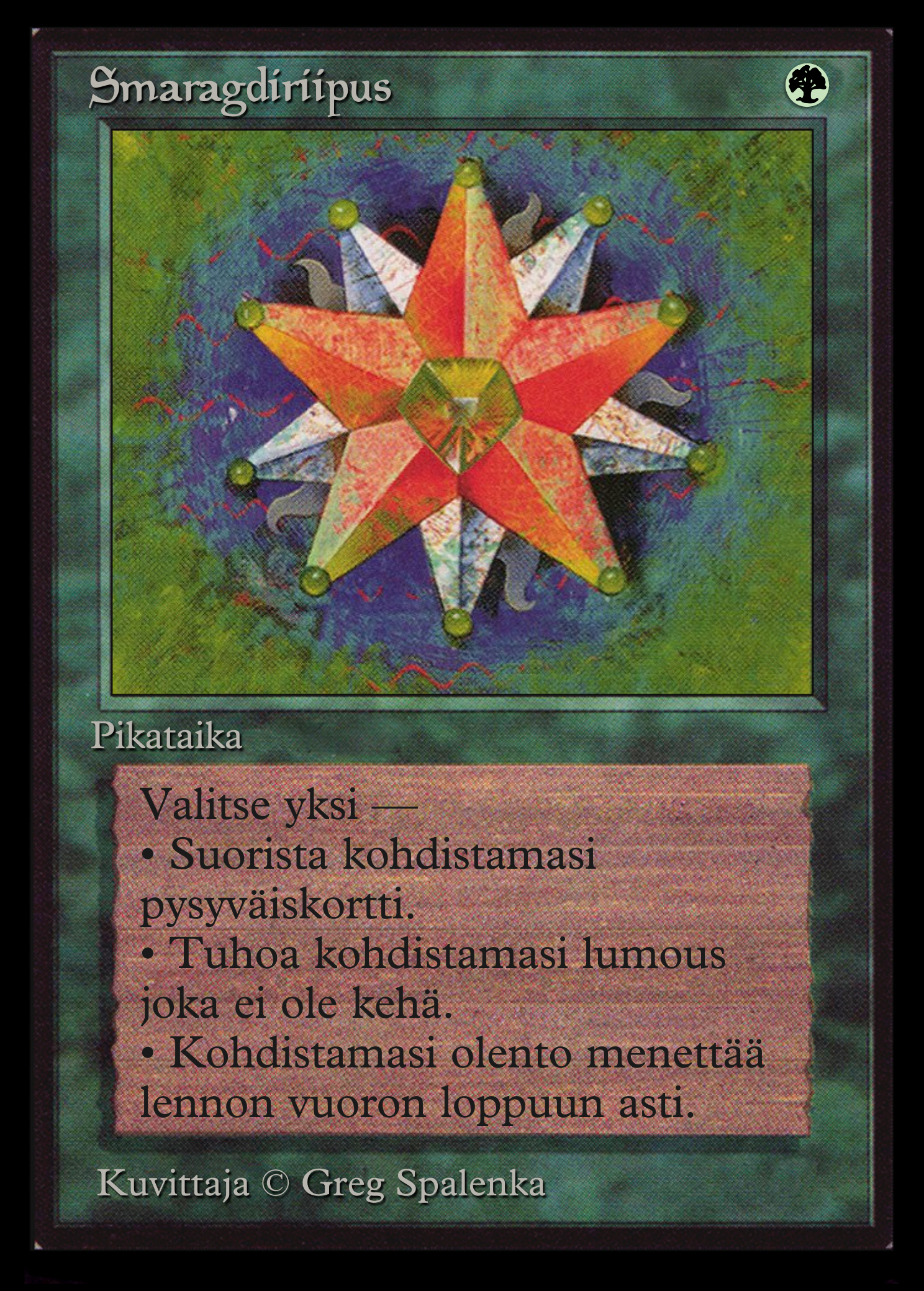
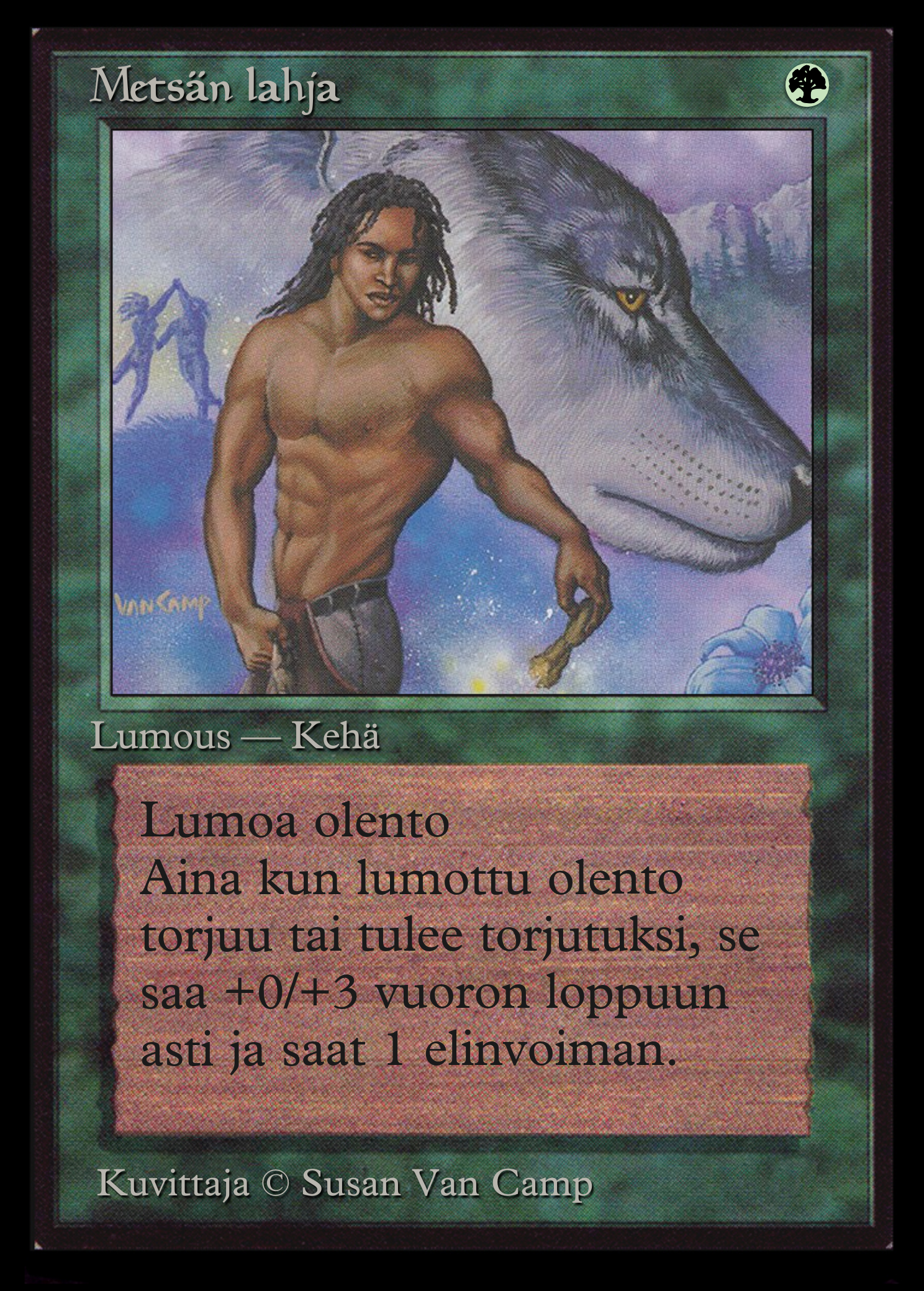
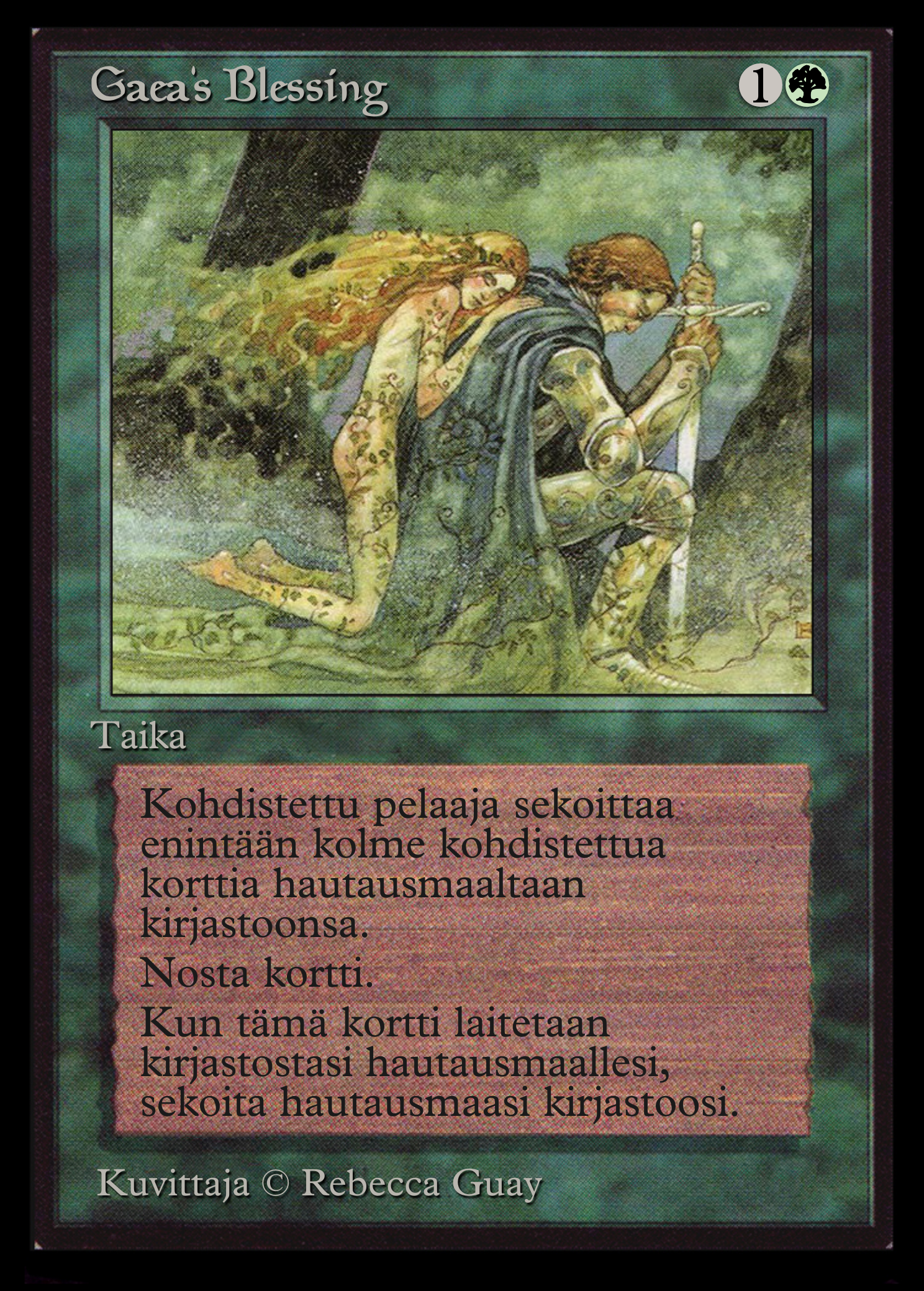
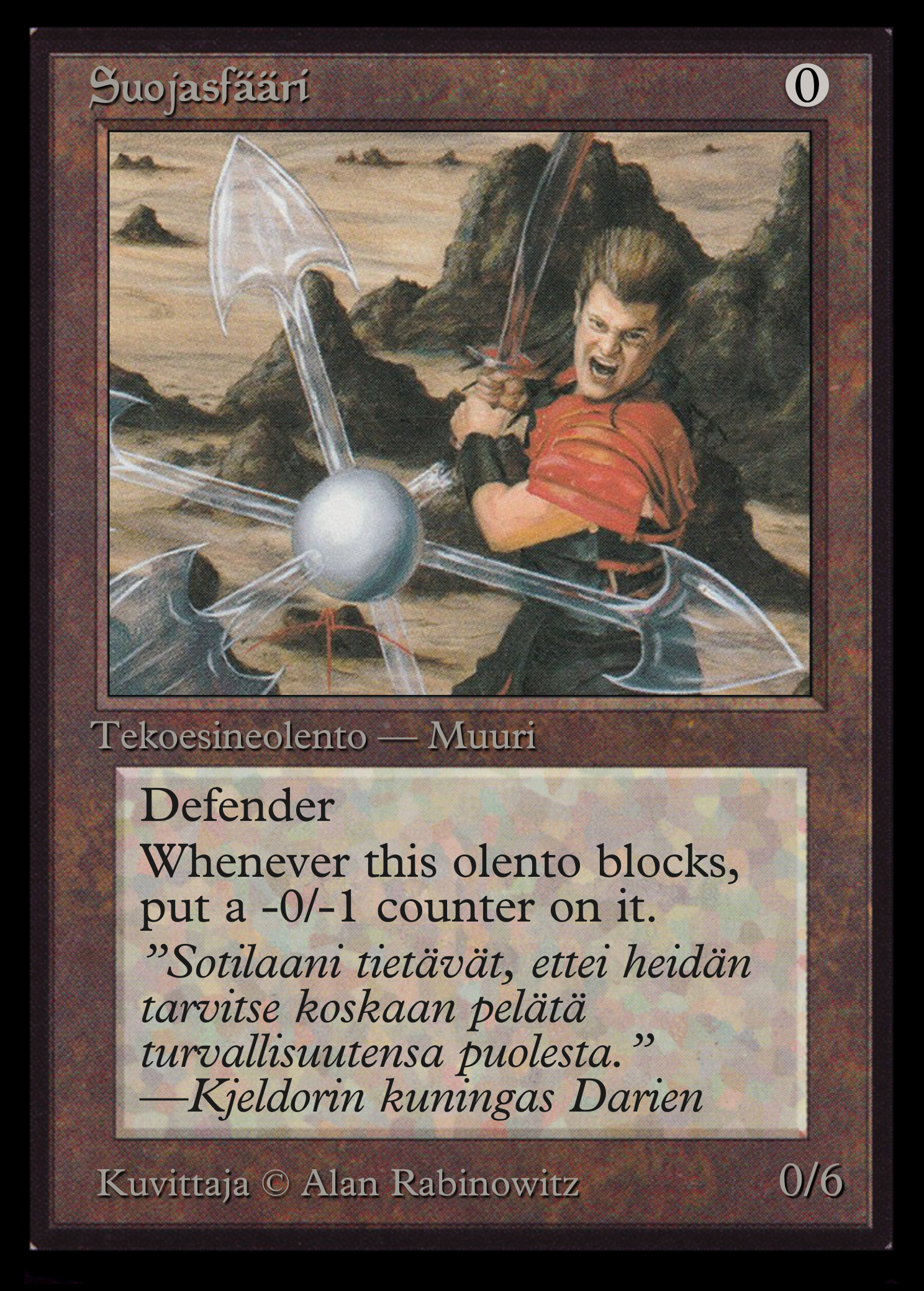
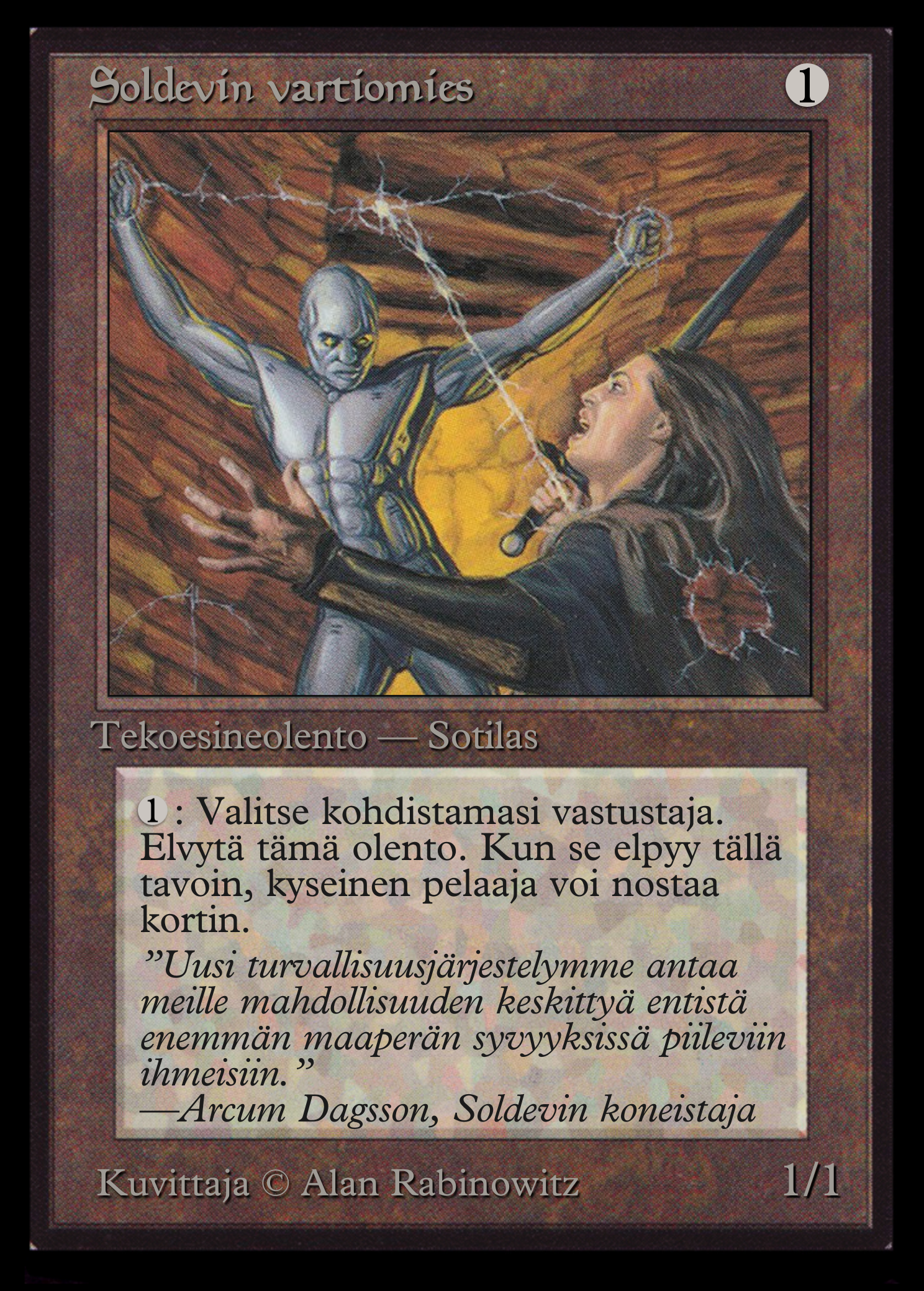
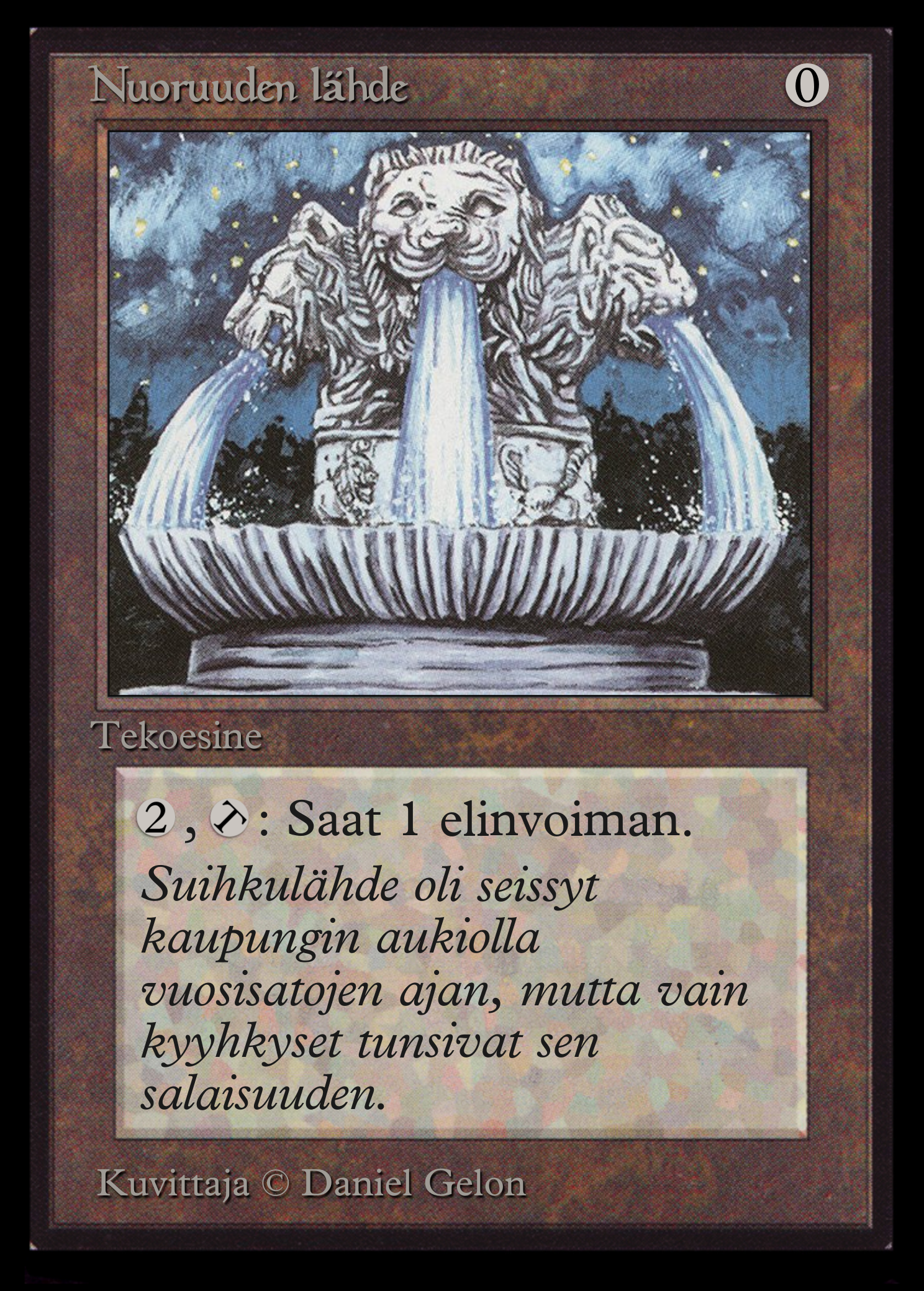
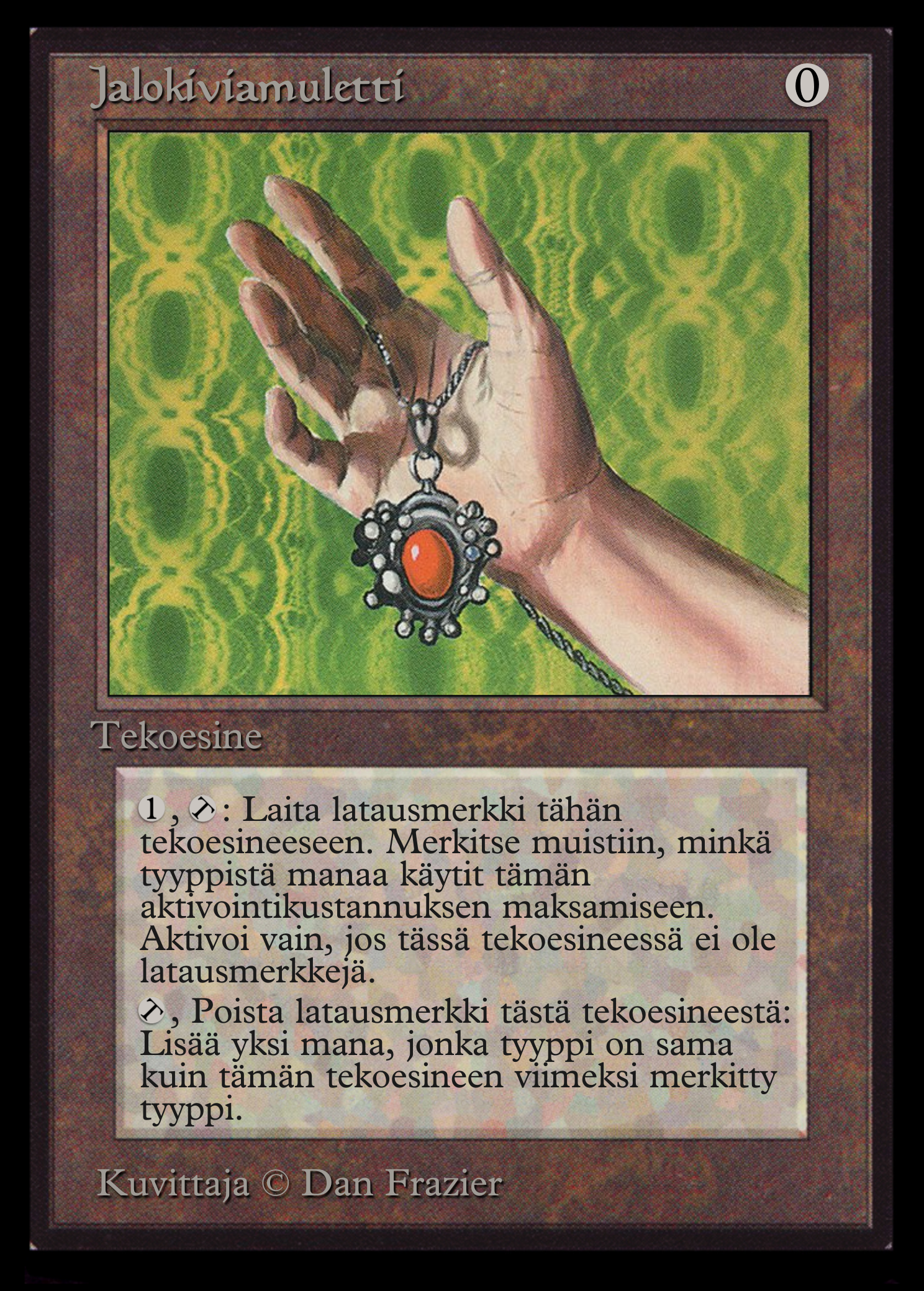
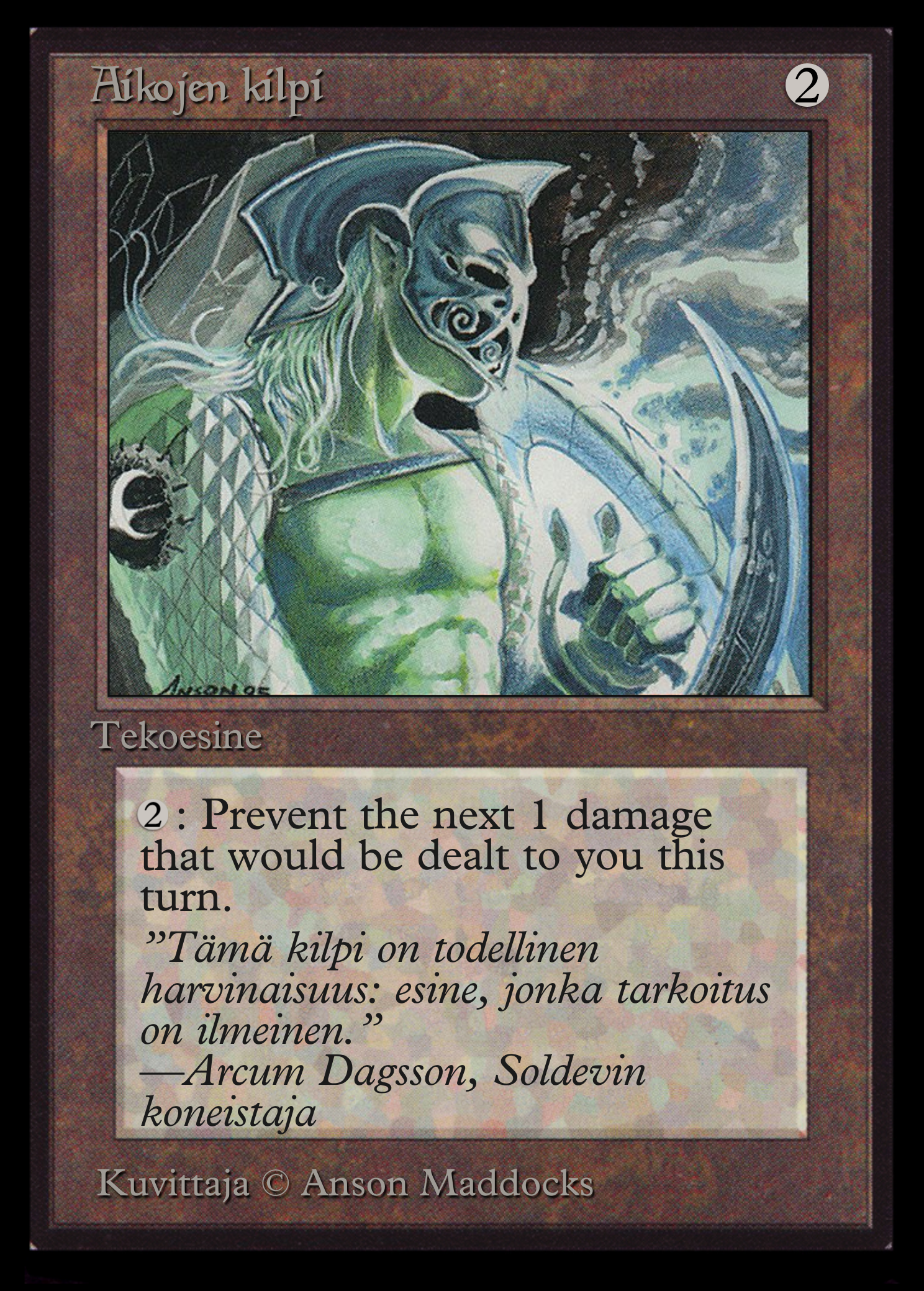
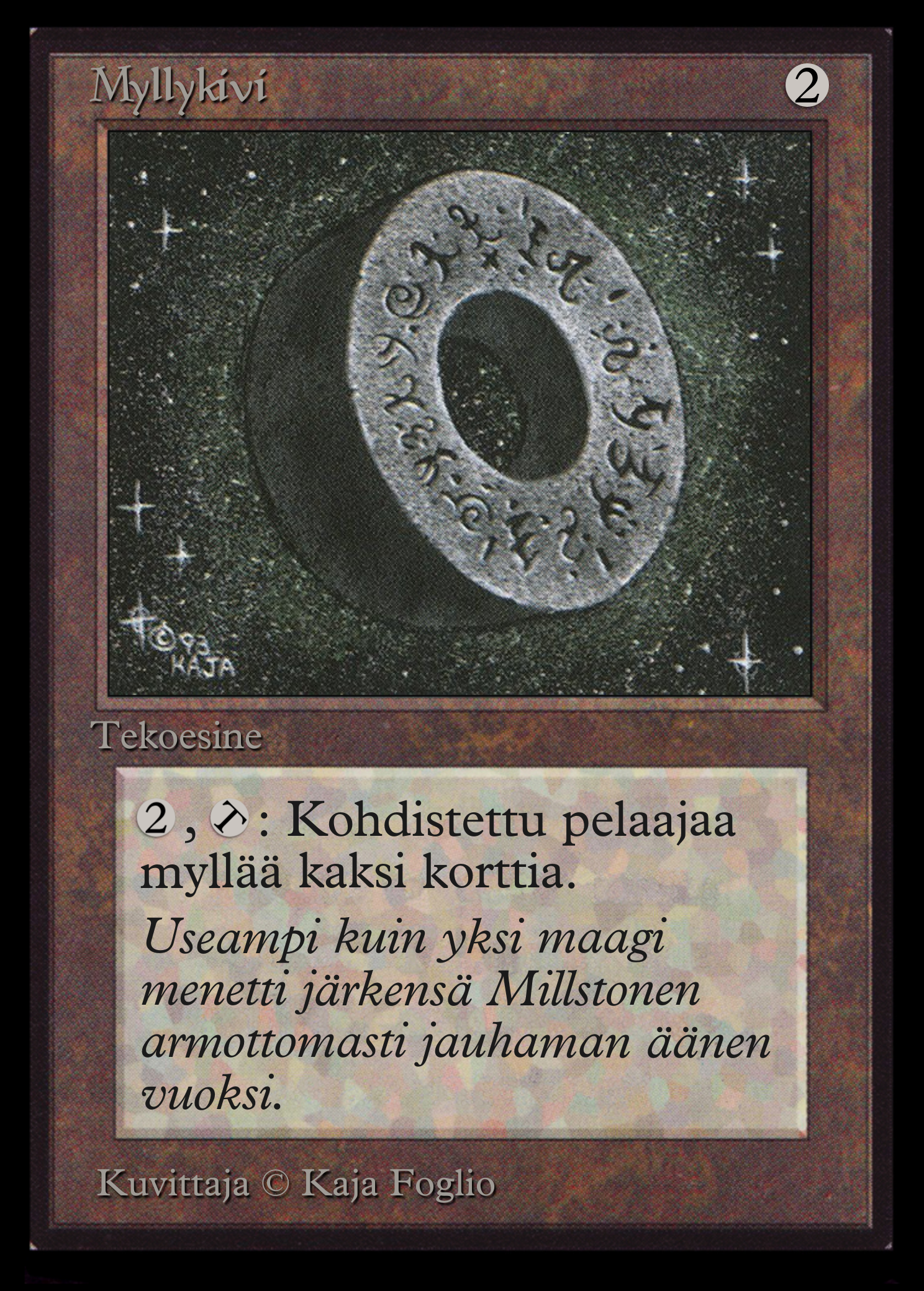
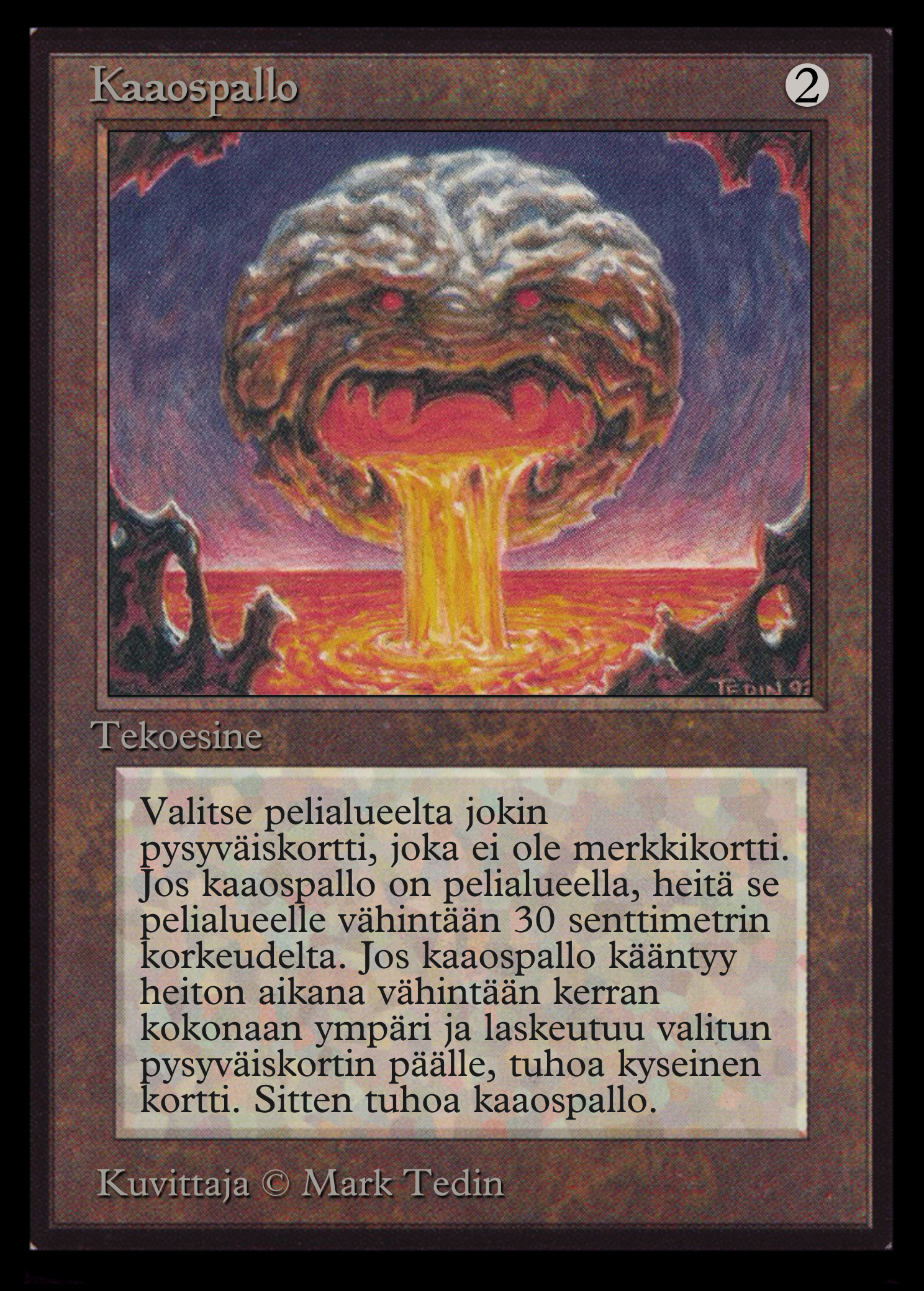
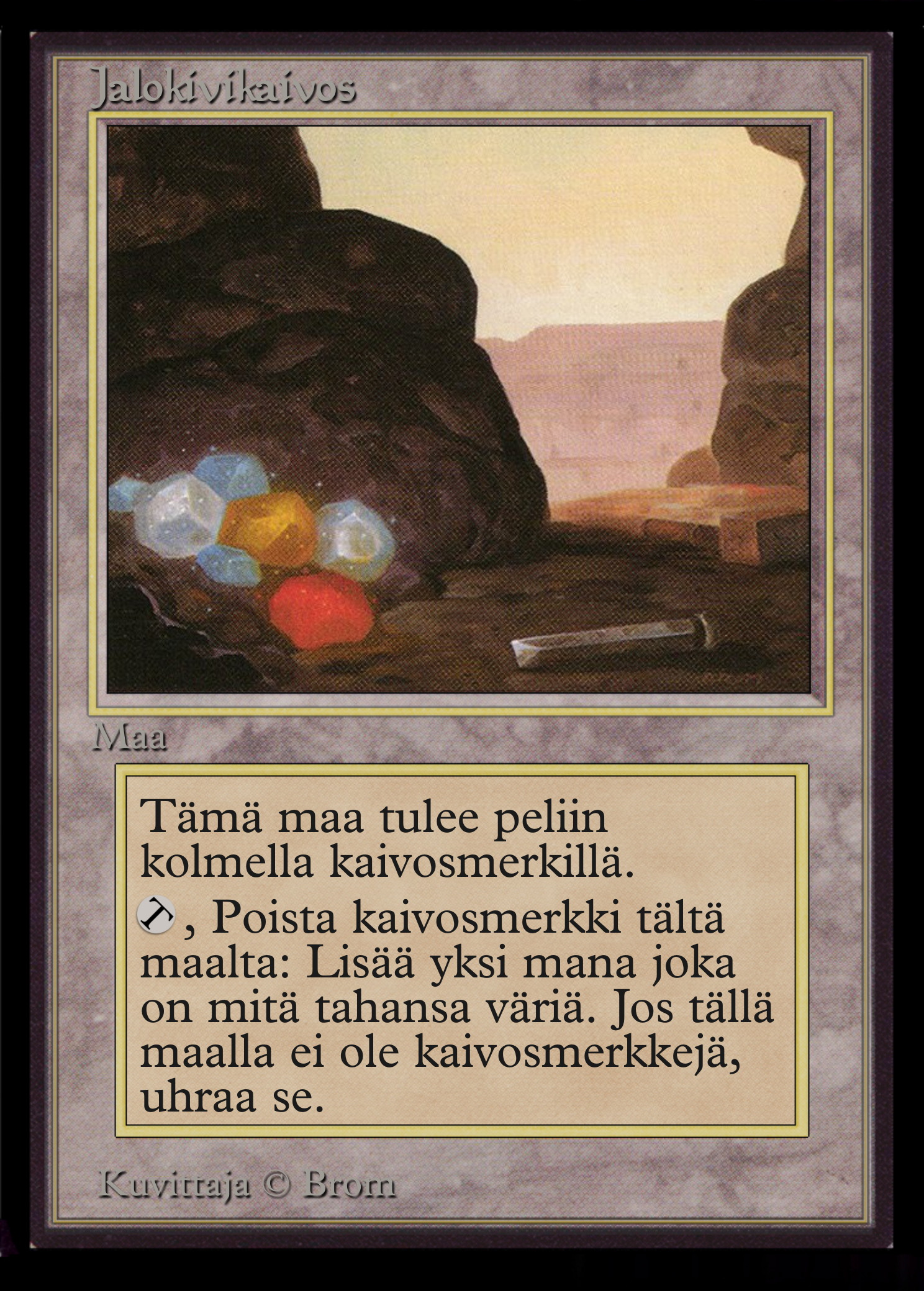
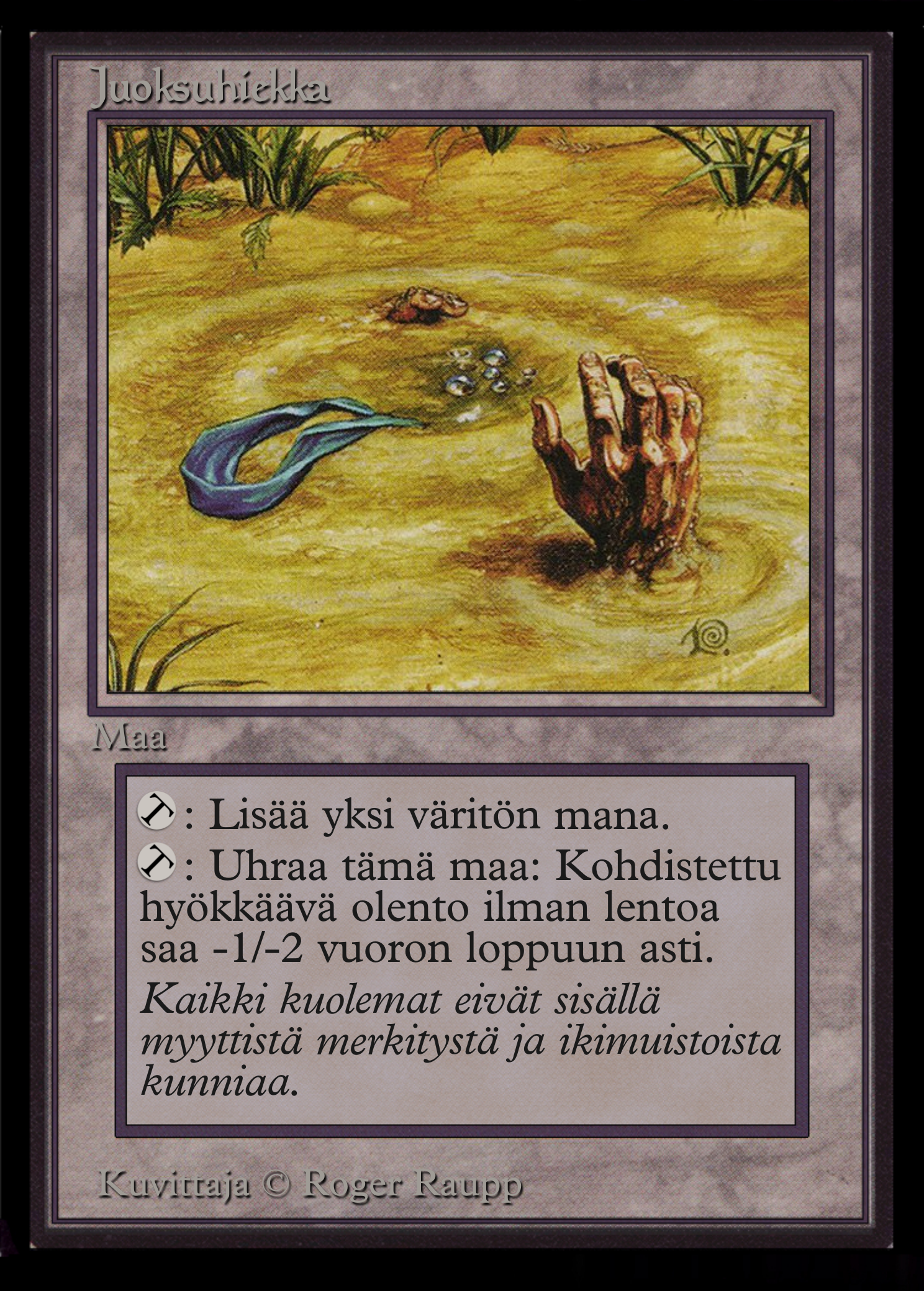
DONE Design framework and targets
- Games should be brief, from 5 to 10 minutes. Thus, “Sudden Death”-format was chosen where players start at 1 life.
- Games should promote replayability and deck building skills. Thus, “Grid draft” for 3 players.
- Drafting should be a competition over cards and colors with hate picks, not just players picking their colors. Thus, least amount of cards in the cube, which is 54, with no rule of adding 3 new random cards in between the picks.
- Drafting and games should feel “intense” so that every pick and play matters.
- Multiplayer aspects without overcomplicating decision-making.
- Politics kept at bare minimum.
- In general, 1-mana cards should be interactive, 2-mana cards should be stabilizing and 3-mana cards should be bombs. These are just design guidelines and exceptions are made, also due to the small card pool.
- Cube should be compact and elegant. We try to find the 54 “best” cards to work with. The deck (54 cards) plus basic lands (6 of each) should fit comfortably into a 100 card deck box.
- A card should give a vibe that “it does something”. Bonus points if it interacts with other cards by creating strategies or by nullifying them.
- Old School card pool is selected for flavor and nostalgia. It has worked well in 5-color-mirror so wanted to expand on that with Scryings-sets. Here’s the 2237 card pool query that is used.
DONE Playtest notes
- Lifegain and damage prevention becomes a lot stronger with starting life of 1.
- Lifegain has to be regulated. Otherwise all decks end up as mill decks.
- Milling becomes as a valid lategame strategy as the 7 card opener already eats away half of the 15 card deck.
- Damage that goes to the face has to be balanced to avoid “non-games”. Balancing means making damage spells symmetrical, higher cmc, or requiring an additional cost a player needs to work for.
- Removal has to be kept in check, either in terms of the creature size or the cost. If possible, “defensive” removal should be prioritized over “offensive” removal.
- First turn is the most critical and a player going first has always a chance to kill the player on the right with the help of “proactive removal” by the player on his left. Thus, 1-mana proactive removal leading to a kill should be kept at minimum.
- Evasion e.g. flying, landwalk, trample, protection from… is very strong and should come at a cost i.e. life, higher cmc, drawback etc.
- Haste and flash creatures are strong because they can win out of nowhere.
- Counter magic and discard perform poorly, as they normally do in multiplayer setting. Force Spike seems to be the only playable exception.
- A healthy proportion of creatures vs. spells seems to be roughly 40:60 allowing maximum amount of interactions and decisions without making games go too long.
- Monocolored decks are possible, but in this grid draft variant without the 3 new cards make them more rare. The high amount of artifacts (7) and lands (2) alleviates this somewhat, but generally two-colored decks seem like the way to go in terms of power.
- Hate picks are norm and strategically a sound option. It may be more right to pick up e.g. Pyroclasm over your own color(s) if your deck is vulnerable to it.
- Normally players end up with 16 to 18 cards each.
- With 4 or 5 lands, mana is much more restricted than in a usual game of limited. Designwise, this indicates that double casting cost cards should be avoided altogether, especially on curve 2, as one is not able not able to play them reliably. See Mana considerations for deeper analysis.
Changelog
Initial release version1
Version 1.0. Looks good on paper but is untested. Now requires playtesting with myself and friends…
Card changes version2
Ater roughly ~20 test drafts and games, changes:
- Cut: Mtenda Herder as flanking negates several 1/1s we have. Add: Savannah Lions as we want to diversify our threats.
- Cut: Samite Healer as we have prevention already enough. Add Kjeldoran Skyknight as we want some 3-mana bomb.
- Cut: Divine Retribution as it was too narrow as a removal. Add Balance as the card seems in this format as a fair stabilizer. Yes. Really.
- Cut: Debt of Loyalty as it never connected as holding up 3 mana up in this format is too much. Add Reinforcements as it can battle against decking.
- Cut: Mana Chains as blue needed more effective first turn answers. Add: Chain Stasis.
- Cut: Goblin Vandal as its ability never triggered. Add: Goblin Chirurgeon.
- Cut: Hurr Jackal as there never was a good opportunity to use its ability. Add: Orcish Spy.
- Cut: Atog as there never was a good opportunity to use its ability. Add: Varchild’s War Riders.
- Cut: Consuming Ferocity as it’s too slow. Add: Ironclaw Curse.
- Cut: Scavenger Folk as we have plenty of artifact removal already. Add: Rime Dryad.
- Cut: Quirion Druid as it was too slow. Add: Uktabi Orangutan.
- Cut: Ashnod’s Transmogrant as it created non-games with 0-mana creatures. Add: Chaos Orb for old school vibes and as an universal but expensive removal.
- Cut: Sheltered Valley as you could only camp behind this and win. Add: Quicksand.
Card and rules changes version3
Roughly ~20 more drafts and games + ideas and experiences shared by Ilpo, Samuli, Antti and Olli.
Change rule “attack on the left” to “attack on the right”: When round and priority order proceeds to the left while attacks are to the right, the player on the right has a chance to play a land and prepare better. The philosophy is very well worded in this stackexchange answer:
Think of each attacking-player/defending-player pairing as a microcosm of beatdown-vs.-control in a larger game. “Attack left” is a lot like the beatdown deck getting to play first in a duel; “attack right” is a lot like the control player getting to take the first turn.
- Eliminate the rule “First player skips his draw step.”: With attack on the right, there is no more basis to balance the gameplay with draw, which as an added bonus makes the rules more closer to official multiplayer rules where first player draws anyway
- Change rule “Last man standing wins the game. First man to win two games wins the match.” to: “You gain 1 victory point whenever your opponent to your right is eliminated. No matter how or by whom. First player to gain 3 victory points wins the match.”
- Shrink the deck size from 72 to 54 cards. This fixes draft and makes sure there is minimum amount of jank in the cube.
- Cut: Weakness as first turn removal as offensive action is more common than having it as an answer. Add: Hell Swarm.
- Cut: Junún Efreet as its upkeep cost is prohibitive and this was never picked. Add: Razortooth Rats.
- Cut: Ornithopter as combined with Essence Flare/Thrull Retainer warped drafts and games around it. Add: Shield Sphere.
- Cut: Kjeldoran Skyknight as we have enough threats on white. Add Revered Unicorn.
- Cut: Elvish Archers as we want to diversify the creature base and their stats against the answers. Add: Spectral Bears as a beater and wall.
- Cut: Feldon’s Cane as it was never really used. Add: Magma Mine.
- Cut: Prodigal Sorcerer as it could be used too easily for king-making and was too powerful. Add: Man-o’-War.
- Cut: Unstable Mutation as it was such a beater. Add: Cloak of Invisibility as a first turn answer and mid-game threat.
- Cut: Granite Gargoyle as it didn’t really do anything. Add: Dwarven Vigilantes to test if its ability every gets used.
- Cut: Goblin Soothsayer as its ability never got used. Add: Rock Slide.
- Cut: Birds of Paradise. While excellent fixer, we found better one. Add: Veteran Explorer as it fixes, ramps and decks. Is a threat as well.
- Cut: Uktabi Orangutan as we have enough artifact removal on red. Add: Lurker.
- Cut: https://mtg.wtf/card/mir/240/Seedling-Charm as this did nothing. Add: Undergrowth as the first turn green answer.
- Cut: Choking Vines as it never did anything, was probably too slow. Add: Forgotten Lore.
Tactics & ways to win
- When the draft is about to close, keep an eye on opponent’s cards you may be vulnerable to and try to prepare for them. Either by deck building and/or by plays. For example: Avoid overextending the board against Balance/Pyroclasm/Dwarven Catapult. Consider if your artifacts are vulnerable to Detonate. Prepare for late game with Mill Stone/Feldon’s Cane etc.
- The player going first has a chance to go aggro. The defending player on the right is always at risk losing as the second player can always choose to silently support first player’s aggressive play. So as an aggressor/defender, mulligan accordingly.
- Deals/negotiation/intimidation are often a poor strategy though you can certainly try. Instead, it may be better to try to bluf or “signal” e.g. by bypassing a play and leave mana open for a potential answer.
- Both combat damage and milling are valid ways to win the game.
- The most obvious way to get around the opponents defense is evasion. A single evasive threat can easily win the game.
- Going “under” the opponent e.g. an unanswered 1/1 on turn 1 and attack on turn 2 is probably the most common win.
- Going “wider” than the opponent also can do the job. As having one more attackers that can connect is often enough.
- Going “bigger” is also pretty valid as the opponent may not be able to double block, because that would leave one attacker unblocked, which forces opponent to “chump block”.
- With 15 card decks, drawing your starting hand already cuts it in half. As soon as the early attacks have been fended, milling 2-4 of opponents cards or shuffling / putting back on top a couple of own cards equals game.
Mana considerations
When a deck is put together with a total of 4 or 5 lands, mana is much more restricted than in a usual game of limited, as the total amount of mana available is in the typical range of mana costs. E.g. there is not much sense in including a 6 cmc creature if you cannot cast in until the last turn of the game realiably, as it cannot attack before decking.
Not only is it tough to play 5 or 6 drops as it may take until the last turn of the game, it is also difficult to get multiples of a single color reliably:
| Percentage | C | 1C | CC | 2C | 1CC | 3C | 2CC | 4C | 3CC |
|---|---|---|---|---|---|---|---|---|---|
| 75% | 3 | 2 | 4 | 2 | 4 | 2 | 3 | 2 | 3 |
| 90% | 4 | 3 | 6 | 3 | 5 | 2 | 4 | 2 | 4 |
Designwise above table indicates that,
- CC cards don’t belong to this cube as missing the right color of mana might cost you a game.
- 1CC cards will only be cast on curve either with very heavy color commitment or mana fixers available.
Q&A, rule and card clarifications
Questions arisen here during development and testing that are parked here for more thorough scrutinity.
DONE How many permanents does Chaos Orb affect?
Just one. Chaos Orb is played by the https://www.eternalcentral.com/9394rules/
DONE Mind Bomb resolves. Who makes the choice first on how many cards to discard?
Players decide and announce in turn order, starting with the active player, how many cards they will discard.
DONE About round time
Q: How long can (should?) a round take?
A: Grid drafting ~15 minutes (validated), deck building 5 minutes (validated). Then a game from 5 to 15 minutes (validated). Then total time to play this from drafing to winner takes roughly ~60 minutes.
DONE About win conditions
Q: Why victory points, why alter win condition rules at all?
A: Magic was casually tested for multiplayer by early play testers, but initial design and release was for two players only. See original Alpha card templating which refers more to two players with phrases like “both players” in Pestilence or in Wheel of Fortune. Also original Alpha rulebook makes it clear multiplayer was not a focus in design. It mentions: “Rules for multiplayer Magic, tournament Magic, and league Magic are forthcoming.”.
So no wonder Magic’s multiplayer has always felt somehow “off” and “hacky”, which to me manifests itself in observations in section Why. For the same reasons the 2-player VTES variant also loses a lot from its multiplayer experience for which the game was originally designed. Per my opinion, rules changes are necessary and easiest way to do this is to determine a sane win condition that goes toward my wanted design targets.
But inventing an elegant win condition proved to be challenging because multiplayer and its dynamics are so different compared to two players playing the game. Luckily, Vampire: The Eternal Struggle card game from the same 90s era was designed from the beginning as a multiplayer and it has the same attack order system. Thus, borrowing its scoring system to determine the winner felt elegant enough.
DONE About the 3-player grid draft rule changes
Q: Why the luckypaper grid draft rule for 3 players is altered to “except after first pick don’t refill the grid with three new, random cards.”?
A: Without notable downsides the rule change enables 3 upsides:
- Smaller cube size of 54 cards with less janky cards in the mix
- More intense and strategic draft experience
- Whole card pool and color combinations are used producing more interesting decks
Q: Why drafted cards are kept face up?
A: I’ve noticed that:
- Having cards open allows better examination and adjustment of draft strategy (hate picks). It feels little bit like “a game within a game”.
- This leads to snarky commenting and analysis from co-players when they see what others have and what they may strive for.
- Draft goes through faster when you don’t need to strain your memory what was picked and by whom.
DONE About the color compositions
Q: What is the proportion of single color decks vs. two (or more) color decks?
A: With 72 card cube it seems constructing a single color decks is more common whereas with 54 card 2-color decks are the norm. One could construct 72 card deck with 3 most playable colors + artifacts too to ensure tight/competitive draft. This cube encourages with single mana pips multicolor decks, though I’m not yet sure whether a certain monocolor deck is stronger than a multicolor deck.
DONE About the 54 card deck vs. 72 cards
Q: Why 54 card deck is used for 3 players?
A: I started with a 72 card deck because most of the 54 decks were made for 2-players. I then noticed 72 cards made drafting too “lax” and “walk in the park” kind of experience when I wanted the experience be “more tight”. Draft pool of 72 cards used to mean three players could commit to exact same colors. This meant you could draft patiently and just pick the cards you need and diversify.
Now, with 54 cards and by not adding 3 cards after a pick, the draft experience becomes much more intense and this scarcity element leads to more often to 2-color decks without completely eliminating single color decks. And this was more to my liking. Also, as old School card pool is small, it meant with 72 cards the last remaining slots got filled with janky cards but 54 cards resolved this as well. Lastly, for everyone to still get two first draft picks with 54 cards, I altered draft rules so that after first pick you don’t refill grid with three new, random cards. Ever since the 54 card deck has been in use.
DONE About ties
Q: In VTES a player does not have to be alive in order to win the game. Just having the most victory points is enough until one player is left. Also players there can’t die simultaneously. How does this sit with Magic where player traditionally have to be “alive” at the end of the game and players can’t die simultaneously?
A: In this 3-player-sudden-death format if you kill two players at the same time, you gain 2 victory points while opponents gain none. So, you have to be “alive” to gain the victory point(s) and in order to win.


